
10 Best Public Toilet Suppliers for Global Buyers?

Time:2026-10-06 Author:Sienna
0%

Choosing the right Public Toilet supplier can shape hygiene, accessibility, maintenance costs, and public trust. For global buyers, a low purchase price rarely tells the complete story. Materials, drainage design, ventilation, water efficiency, installation support, and replacement parts matter just as much.

This guide reviews 10 leading Public Toilet suppliers for international projects, including transport hubs, parks, construction sites, tourist areas, and emergency facilities. The selection focuses on manufacturing experience, product durability, customization, certifications, export capability, and after-sales service. We also consider practical details, such as stainless-steel thickness, anti-slip flooring, cleaning access, odor control, and delivery protection. These details often decide whether a facility performs well after heavy daily use.

Real projects are rarely perfect. A supplier may offer excellent engineering but limited local support. Another may provide attractive designs but unclear maintenance instructions. Buyers should verify factory records, inspection procedures, warranty terms, and references before signing contracts. Product photos are useful, but they cannot replace factory audits or sample testing.

This comparison is intended to support careful decisions, not promote one universal winner. Climate, user volume, local infrastructure, and budget can change the result. The best Public Toilet supplier is the one that matches the project’s actual conditions and remains dependable after installation. Small details matter. Reliability matters more.
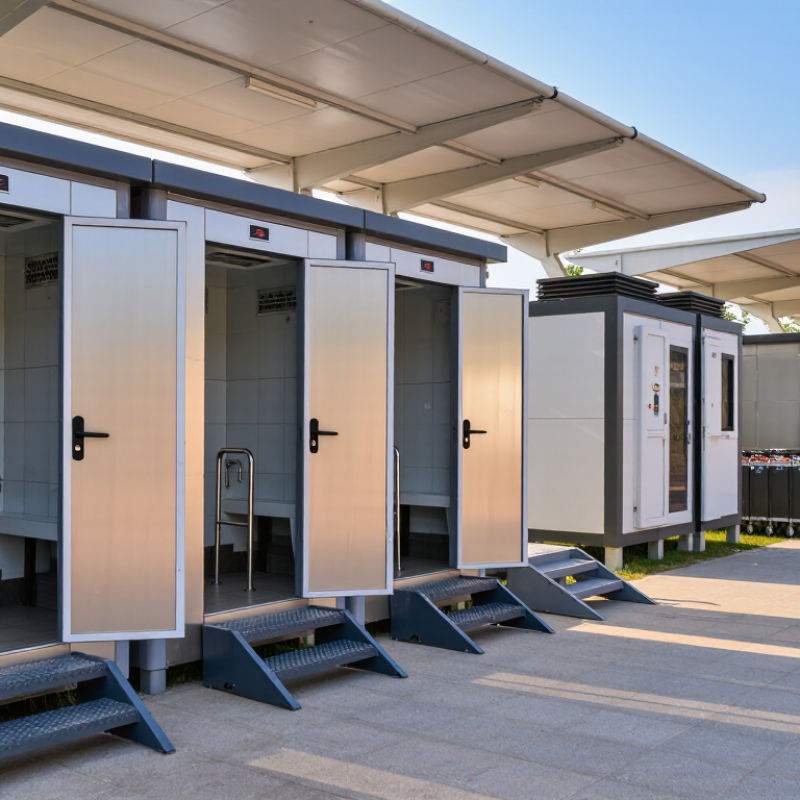
10 Best Public Toilet Suppliers for Global Buyers?

Public Toilet Suppliers: Industry Scope and Product Categories

Public toilet suppliers serve more than fixture purchasing. Their scope includes site assessment, layout planning, manufacturing, installation, cleaning access, spare parts, and long-term maintenance. Procurement teams usually compare ceramic toilets, stainless-steel cubicles, urinals, washbasins, accessible units, baby-care facilities, and modular restroom buildings. Sensor taps, touchless flush systems, ventilation equipment, occupancy indicators, and water-saving controls are also important categories.

The WHO and UNICEF Joint Monitoring Programme reported that 3.5 billion people lacked safely managed sanitation in 2022. This figure concerns household and public sanitation together, but it shows the scale of unmet infrastructure needs. Suppliers serving transport hubs, parks, schools, hospitals, and construction sites therefore need flexible product portfolios. Durable stainless steel suits heavy traffic. Ceramic fixtures may offer easier replacement. Modular units can reduce construction time, but their transport and foundation requirements are sometimes underestimated.

Reliability matters more than catalogue size. Industry buyers should check water consumption, vandal resistance, slip resistance, cleaning frequency, accessibility, warranty terms, and local service capacity. The World Health Organization has estimated that every dollar invested in sanitation can produce about 5.50 dollars in economic returns, although results vary by location and project quality. A cheaper unit may become expensive after repeated repairs. That lesson is easy to overlook. Procurement models also need honest field testing, because touchless sensors can fail in dust, humidity, or poor power conditions. Public toilet suppliers with engineering support, documented testing, and transparent replacement policies are better positioned for global projects.

Key Criteria for Evaluating Global Toilet Manufacturers

Choosing among global toilet manufacturers requires more than comparing catalog prices. Begin with production evidence, not polished photographs. Ask for the factory address, equipment details, monthly capacity, and recent export references. A reliable supplier should provide material specifications, inspection records, and clear sample procedures. Request a physical sample when possible. Check glaze uniformity, ceramic density, seat alignment, and flushing performance. Small defects often appear only after installation.

Technical compliance deserves careful attention. Confirm dimensions, inlet positions, trap design, water consumption, and drainage compatibility for each market. Independent laboratory reports are stronger than unsigned claims. Verify whether testing matches the destination’s current requirements. Packaging also matters. Drop-tested cartons, corner protection, moisture barriers, and labeled spare parts reduce damage during long sea transit. Ask how the supplier handles cracked units, missing components, and delayed containers.

Experience becomes visible in communication. Does the engineering team answer drawings accurately? Can the factory explain mold changes, kiln temperatures, and quality checkpoints? Request a production sample and inspect it against the approved specification before mass manufacturing. Visit the site, or use an independent audit if travel is impractical. No evaluation is perfect. I have seen impressive samples followed by inconsistent batches. A written warranty, traceable batch records, and realistic lead times reveal more than confident sales language. Review payment terms and after-sales support with the same care as product performance.

Profiles of Ten Leading Public Toilet Suppliers

Global buyers need more than attractive drawings when selecting public toilet suppliers. The WHO/UNICEF Joint Monitoring Programme reported in 2023 that 3.5 billion people lacked safely managed sanitation services in 2022. That gap increases demand for durable, accessible, and maintainable facilities.

These ten supplier profiles represent leading capability groups, rather than a strict ranking. Modular manufacturers provide factory-built toilet cabins for rapid deployment. Stainless-steel fabricators focus on vandal resistance and intensive use. Precast concrete suppliers offer stable structures for transport hubs and parks. Accessible sanitation specialists design wider doors, grab rails, and low-threshold entrances. Smart sanitation suppliers integrate occupancy sensors and remote fault alerts. Water-saving system providers reduce flushing demand through controlled valves and efficient fixtures. Portable unit manufacturers support festivals, construction sites, and emergency projects. Public furniture suppliers coordinate toilets with shelters, bins, and lighting. Cleaning-technology suppliers improve hygiene through touchless taps and surface systems. Custom engineering firms adapt layouts to climate, drainage, and local maintenance skills.

The ISO 21542 accessibility framework can guide dimensional reviews, while EN 16194 helps assess portable sanitation units. Buyers should request test records, material specifications, spare-parts schedules, and cleaning procedures. On-site experience matters. A polished cabin may still fail when hinges corrode or sensors lose power. The World Bank’s sanitation research repeatedly links service quality with operation and maintenance, not construction alone. This point is easy to overlook. Supplier claims also deserve skepticism; independent inspections and pilot installations remain necessary before large orders.

10 Best Public Toilet Suppliers for Global Buyers? - Profiles of Ten Leading Public Toilet Suppliers
Profile Supplier Category Core Product Scope Typical Construction Common Compliance Requirements Customization Capability Typical Lead Time Best-Fit Applications
01 Modular Public Toilet Specialist Prefabricated units Complete washrooms Site installation support Factory-assembled steel or reinforced-frame modules with waterproof wall, floor and ceiling systems. Project-specific building codes; accessibility requirements; electrical and plumbing regulations applicable to the destination market. Layout adaptation, external finishes, sanitary fixtures, ventilation, lighting and accessible compartments. Approximately 8–16 weeks after approved drawings and specifications. Transport hubs, parks, construction sites, campuses and remote public facilities.
02 Stainless-Steel Washroom Systems Supplier Cubicles Urinal screens Vanity units Grab bars 304-grade stainless steel for general indoor use; 316-grade stainless steel is commonly selected for coastal or highly corrosive environments. Material certificates, weld quality documentation and project-specific accessibility provisions can be requested. Sheet thickness, surface finish, panel dimensions, hardware, partitions and fixture integration. Approximately 4–10 weeks for standard systems; longer for engineered projects. Airports, stadiums, shopping centres, marine areas and high-traffic public buildings.
03 Compact Laminate Cubicle Supplier Toilet partitions Changing rooms Privacy screens High-pressure compact laminate panels with moisture-resistant cores, stainless-steel or aluminium hardware and adjustable feet. Panel fire performance, moisture resistance and hardware safety should be verified against the project specification. Colour selection, anti-graffiti surfaces, floor-to-ceiling layouts, accessible cubicles and custom hardware. Approximately 3–8 weeks, depending on colour availability and quantity. Schools, offices, leisure centres, retail facilities and municipal buildings.
04 Portable Sanitation Unit Supplier Portable toilets Accessible units Event facilities Handwash stations Rotomoulded polyethylene shells with non-slip floors, holding tanks, ventilation and serviceable fittings. Local sanitation, transport, waste-handling and accessibility rules must be checked before deployment. Colour, internal layout, tank capacity, lifting points, ramps, sinks and service accessories. Approximately 2–8 weeks for standard units; fleet orders may require staged delivery. Outdoor events, festivals, emergency response, temporary worksites and disaster relief.
05 Public Toilet Pod and Container Supplier Containerized washrooms Site cabins Multi-stall pods Modified steel containers or structural cabins with insulated envelope panels, internal plumbing and electrical services. Structural certification, fire safety, thermal performance, electrical compliance and local planning requirements may apply. Number of stalls, shower areas, accessible rooms, façade treatment, HVAC, water heating and solar options. Approximately 8–20 weeks, depending on engineering and shipping requirements. Mining camps, public works, temporary accommodation, festivals and remote infrastructure projects.
06 Inclusive and Accessible Washroom Supplier Accessible toilets Adult changing rooms Baby-care areas Heavy-duty partitions, reinforced walls, non-slip flooring, support rails, emergency alarms and wider circulation zones. Design can be aligned with applicable accessibility standards such as ADA, EN 17210 or AS 1428, subject to local approval. Left- or right-hand layouts, transfer spaces, hoists, changing benches, grab-rail positions and alarm systems. Approximately 6–14 weeks after accessibility drawings are approved. Airports, hospitals, transport stations, shopping centres, parks and civic buildings.
07 Water-Efficient Public Washroom Supplier Low-flow fixtures Sensor faucets Dual-flush systems Water controls Commercial-grade sanitaryware combined with sensor-operated taps, timed flow controls and water-saving flush valves. Fixture performance, electrical safety, water-efficiency labels and local plumbing approvals should be verified for the destination. Fixture colour, control type, flow rate, flush volume, vandal-resistant protection and maintenance access. Approximately 4–12 weeks, depending on fixture selection and control-system integration. Green buildings, airports, municipalities, universities, hotels and high-use commercial facilities.
08 Vandal-Resistant Public Toilet Supplier Anti-vandal fixtures Security hardware Reinforced cubicles Robust stainless steel or compact laminate components, concealed fixings, tamper-resistant screws and impact-resistant fittings. Product durability, slip resistance, electrical safety and local building requirements should be assessed for each project. Security-grade locks, concealed services, anti-graffiti coatings, reinforced doors and sensor protection. Approximately 5–12 weeks for standard products; custom security details may extend production time. Public parks, beaches, transit areas, correctional facilities and high-risk outdoor locations.
09 Design-and-Build Public Toilet Contractor Concept design Civil works MEP coordination Installation Project-specific combinations of masonry, concrete, steel, glazing, ceramic finishes and prefabricated washroom components. Planning approval, structural design, fire protection, drainage, electrical and accessibility compliance are coordinated by project scope. Full architectural coordination, landscaping, signage, security systems, renewable energy and maintenance planning. Approximately 12–30 weeks, depending on permits, civil works and site conditions. Municipal developments, visitor centres, public parks, tourist sites and permanent infrastructure.
10 Public Toilet Renovation and Retrofit Supplier Cubicle replacement Fixture upgrades Surface refurbishment Maintenance packages Replacement partitions, new sanitary fixtures, waterproof wall systems, slip-resistant flooring and upgraded plumbing controls. Existing-building surveys, local plumbing rules, accessibility upgrades and electrical requirements are reviewed before installation. Phased renovation, night work, colour matching, fixture replacement, ventilation upgrades and minimal-closure solutions. Approximately 2–10 weeks for materials; installation duration depends on the number of washrooms. Hotels, schools, hospitals, retail centres, offices, stations and older municipal facilities.
Buyer reference: Lead times, materials, certifications, shipping terms and installation responsibilities are typical industry ranges rather than guarantees. Global buyers should confirm local building codes, accessibility rules, plumbing approvals, fire requirements, warranty terms, spare-parts availability and after-sales service before placing an order.

International Standards, Customization, and Installation Services

10 Best Public Toilet Suppliers for Global Buyers?

International Standards, Customization, and Installation Services

Choosing a public toilet supplier requires more than comparing catalog prices. Reliable suppliers understand local plumbing, electrical, fire safety, and accessibility requirements. International standards help, but local approval remains essential. Ask for test reports, material specifications, and installation records before signing a contract. Clear evidence matters.

Customization should match the site, climate, and expected traffic. Stainless steel panels may suit coastal areas, while insulated structures perform better in colder regions. Suppliers should adjust cubicle sizes, drainage points, ventilation, lighting, and access routes. Small details matter. A parent room, tactile signs, and slip-resistant flooring can improve daily use. However, excessive customization can delay production and complicate replacement work.

Installation support separates a capable supplier from a factory-only seller. Strong teams provide layout drawings, foundation guidance, delivery planning, on-site assembly, commissioning, and maintenance training. They should also explain spare-part availability and cleaning procedures. Site experience shows that a perfect factory sample can mislead buyers. Ground levels change, drainage may be poorly prepared, and delivery access is often underestimated. A careful supplier identifies these risks early, although no project plan is flawless. Buyers should request a realistic schedule, defined responsibilities, inspection points, and post-installation support in writing.

Pricing, Procurement, and Supplier Selection Considerations

For global buyers, public toilet procurement should begin with demand, climate, and usage intensity. The WHO/UNICEF Joint Monitoring Programme reported in 2023 that 3.5 billion people lacked safely managed sanitation in 2022. This gap increases demand for durable, maintainable facilities. Yet one specification rarely fits every market. Coastal sites need corrosion resistance, while colder regions require stronger insulation and freeze protection.

Pricing should cover the full ownership period, not only the factory quotation. Compare the unit price, freight, installation, spare parts, cleaning access, energy use, and disposal costs. The World Bank’s procurement framework emphasizes value for money and life-cycle costing. ISO 15686-5 also supports this approach. A cheaper cubicle may become expensive after repeated hinge failures. A low quote can still be wrong. Buyers should request a cost breakdown, production lead time, minimum order quantity, payment terms, and warranty exclusions.

Supplier evaluation needs practical evidence. Ask for material certificates, load-test records, water-efficiency data, accessibility details, and references from similar climates. Check whether replacement parts can arrive locally within a defined period. Factory audits should examine welding quality, drainage slopes, surface finishes, and packaging protection. The WHO Sanitation Safety Planning guidance supports risk-based sanitation management, especially where wastewater systems are limited. No checklist is perfect. Buyers may still overlook local cleaning habits or vandalism risks. A pilot installation, monitored for three to six months, can reveal problems that brochures never show.

10 Best Public Toilet Suppliers for Global Buyers: Procurement Evaluation Framework

A practical weighted-score model for comparing public toilet suppliers. The criteria reflect common international procurement priorities, including compliance, total cost of ownership, delivery capability, durability, and after-sales support. Buyers can adjust the weights to match project requirements.

Recommended weighting: compliance and safety 20%, total cost of ownership 20%, product quality and durability 15%, production capacity and lead time 15%, customization capability 10%, warranty and spare-parts support 10%, installation and technical service 10%.

FAQS

What services should a public toilet supplier provide?

Services may include site assessment, layout planning, manufacturing, installation, spare parts, and long-term maintenance. Cleaning access matters too.

Which product categories are commonly needed?

Buyers often need toilets, urinals, washbasins, cubicles, accessible units, and baby-care facilities. Modular restroom buildings can shorten construction time. Transport and foundation costs need careful checking.

How should buyers compare different suppliers?

Compare durability, water use, slip resistance, vandal resistance, warranty terms, and local service capacity. A large catalogue proves little.

What evidence should a reliable manufacturer provide?

Request material specifications, inspection records, production samples, factory details, and recent project references. Inspect physical samples whenever possible. Photographs can hide defects.

Which technical details require close attention?

Confirm dimensions, inlet positions, trap design, drainage compatibility, water consumption, and accessibility features. Check local requirements. Unsigned claims are weak evidence.

How can buyers reduce damage during transport?

Use drop-tested cartons, corner protection, moisture barriers, and clearly labeled spare parts. Ask about cracked units and missing components. Sea transit can be rough.

How should public toilet pricing be evaluated?

Calculate the full ownership cost, including freight, installation, cleaning access, energy use, repairs, and disposal. A cheap cubicle may need repeated hinge replacements.

Why is pilot testing useful before mass installation?

A three-to-six-month pilot can reveal sensor failures, drainage problems, cleaning difficulties, and vandalism risks. Brochures cannot show everything. No checklist is perfect.

Conclusion

This article provides a practical guide to selecting reliable Public Toilet suppliers for international projects. It examines the industry’s scope, including modular units, portable facilities, accessible toilets, smart sanitation systems, and customized public restroom solutions. Buyers will learn how to evaluate manufacturers by product quality, production capacity, material durability, technical expertise, certifications, delivery performance, and after-sales support.

The article also introduces ten types of leading suppliers without focusing on specific brand names, helping readers compare their strengths and suitability for different markets. It explains the importance of international standards, flexible customization, installation assistance, maintenance services, and clear project documentation. In addition, it discusses pricing structures, procurement planning, shipping considerations, warranty terms, and supplier communication. These insights are designed to help global buyers make informed, cost-effective decisions and choose a supplier capable of delivering safe, durable, compliant, and user-friendly public sanitation facilities.

Sienna

Sienna

Sienna is a skilled marketing professional with a deep expertise in our company’s core products and services. With a passion for innovation and detail, she plays a pivotal role in crafting insightful blog posts that not only highlight the unique features of our offerings but also provide valuable......