Featured Converted Container Units (Series A)
Direct-from-factory modular container units configured for commercial accommodation, temporary workforce camps, luxury glamping, and mobile sanitation infrastructure.
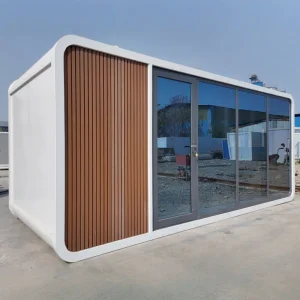
Wholesale High Quality 20 Foot Modern Style Prefabricated Modular Apple Cabin Equipped with Private Bathroom
Inquire Product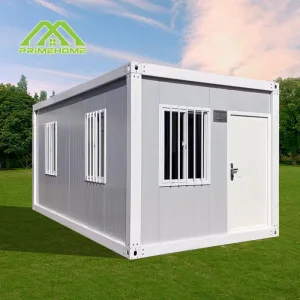
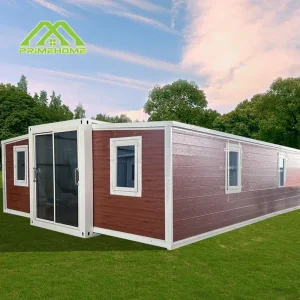
Wholesale Luxury rapid portable expandable prefabricated container house suitable for apartments, hotels, outdoor villas
Inquire Product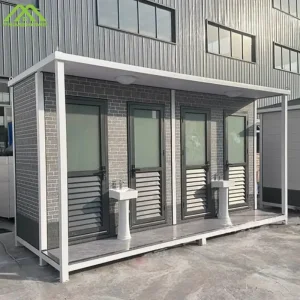
Wholesale Durable and clean Prefabricated mobile container toilets Source factory Good price Manufacturers, Factory
Inquire Product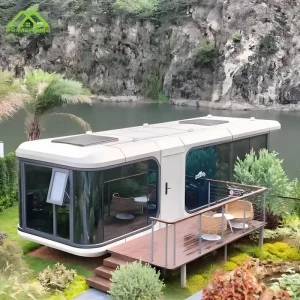
High-Quality Stylish and luxurious design Most popular in the future city Intelligent mobile space capsules from China Supplier
Inquire Product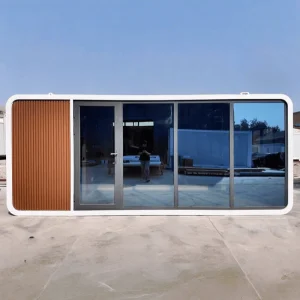
Custom Stylish Apple Capsule House Modular Prefab Living Cabin with Quick Setup for Resort Home Office
Inquire Product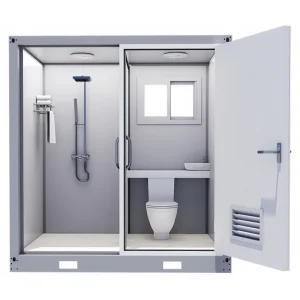
High-Quality Factory Pre-finished Customized Prefab Restroom With Shower Indoor Glass Wall Bathroom
Inquire Product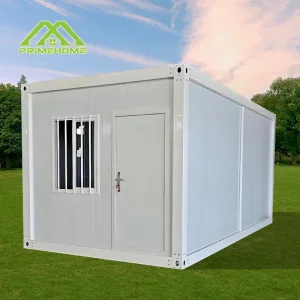
China Lightweight modular prefabricated container houses Ideal for post-disaster reconstruction Quick installation Reusable
Inquire Product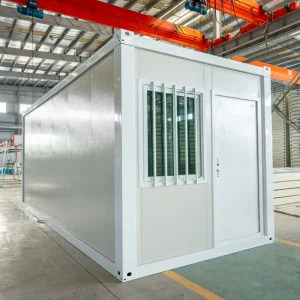
High-Quality Stackable Multi-Layer Fast Install Economical Foldable Container House for Worker Dorms and Emergency Rescue
Inquire Product1. Global Commercial & Industrial Landscape of Converted Storage Containers
The international modular construction and repurposed architecture sector is undergoing a paradigm shift. Globally, enterprise buyers, EPC (Engineering, Procurement, and Construction) contractors, and commercial developers are rapidly moving away from traditional stick-built structures in favor of converted storage containers and specialized pre-engineered steel modules. Driven by stringent sustainability targets, escalating field labor costs, and urgent project timelines, the global market for converted shipping containers and prefabricated container structures is projected to exceed USD $18.5 Billion by 2030.
Historically, "container conversion" implied modifying used ISO intermodal shipping containers (CORTEN steel boxes) on site. However, modern industrial demands have evolved this concept into factory-manufactured, customized modular structures engineered from purpose-built steel frames, optimized sandwich panels, and pre-integrated Mechanical, Electrical, and Plumbing (MEP) systems. These modular units retain the robust structural geometry and intermodal freight compatibility of standard shipping containers while eliminating internal space constraints, rust degradation, and hazardous chemical residue associated with second-hand ISO cargo boxes.
CAPEX & Timeline Efficiency
Factory-controlled parallel processing allows site civil work and building fabrication to occur simultaneously, slashing overall project timelines by up to 70% while guaranteeing fixed financial pricing.
ESG & Environmental Compliance
Zero-waste factory assembly reduces site carbon footprints. Structures utilize recyclable steel framing and high-R-value thermal envelopes that meet international energy-efficiency standards.
Structural Resilience
Engineered to withstand extreme weather conditions, including Grade 8+ seismic events, Category 12 typhoon-force winds (up to 180 km/h), and heavy snow loads in alpine regions.
2. China’s Manufacturing Dominance & Supply Chain Efficiency
China produces over 85% of the world's modular prefabricated containers and ISO shipping containers. This dominance is not merely a matter of raw volume; it stems from a deeply integrated industrial ecosystem centered around regions like Jiangsu (Suzhou), Zhejiang, and Guangdong. For international enterprises seeking China Converted Storage Containers Suppliers & Factories, partnering directly with tier-1 manufacturers provides unmatched economic and technical advantages.
Raw Material Upstream Integration
Chinese factories benefit from direct access to premier domestic steel mills (such as Baosteel and Ansteel), securing structural CORTEN steel, cold-formed galvanized steel profiles, and specialized aluminum alloys at base commodity pricing. This raw material proximity eliminates international import markups on raw steel components.
Automated Production & Precision Robotics
Leading manufacturers utilize automated laser cutting machines, robotic welding cells, and continuous sandwich panel lamination lines. This ensures millimeter-level precision, superior joint integrity, and flawless paint finish quality across high-volume production orders.
Technical Sourcing Matrix: ISO Conversion vs. Prefab Container Steel Framing
When procuring modular container buildings from China, enterprise buyers must select the structural framework that best aligns with their operational requirements. Below is an engineering comparison:
| Engineering Parameters | Standard Used ISO Shipping Container Conversion | Customized Modular Prefab Container (Steel Frame) | Futuristic Pods (Apple Cabin / Space Capsule) |
|---|---|---|---|
| Primary Structural Steel | 1.6mm - 2.0mm Corrugated CORTEN-A Steel | 2.5mm - 4.0mm Hot-Dip Galvanized Cold-Formed Steel | Aviation-Grade Aluminum Outer Shell + Steel Frame |
| Internal Width & Layout | Fixed (2.35m internal width limits floor plan flexibility) | Fully Customizable (Up to 3.0m - 4.0m single module width) | Curved Aerodynamic Design (Optimized Space Matrix) |
| Thermal Insulation Insulation | Internal spray foam or wall stud retrofitting (reduces space) | Factory-integrated PU / Rockwool / EPS Sandwich Panels (50-100mm) | Multi-layer Polyurethane Foam + Vacuum Insulation Panels |
| Corrosion Protection | Requires manual rust treatment & chemical stripping | Zinc Galvanized Coating (275g/m²) + Fluorocarbon Spraying | Fluorocarbon Coated Aluminum Sheet (Anti-marine corrosion) |
| Shipping Logistics Efficiency | Transported as standard 20ft/40ft SOC containers | Flat-Pack bundles (4 units fit into one 40HQ container) | Shipped as fully finished complete plug-and-play modules |
| Target Sourcing Scenario | Heavy-duty rugged storage, industrial equipment housings | Worker dormitories, site offices, schools, medical clinics | High-end resort cabins, glamping, luxury commercial space |
3. Global Sourcing & Localized Application Scenarios
The versatile nature of Chinese converted and prefabricated storage container structures allows them to be deployed in vastly different geographical climates and commercial environments worldwide.
Workforce Camps & Remote Mining Infrastructure
Deployed in remote regions across Western Australia, South America, and Africa. Modular flat-pack container units are stacked 2 to 3 stories high to create durable, climate-controlled sleeping quarters, dining halls, and site office complexes capable of resisting sandstorms and high thermal fluctuations.
Eco-Resorts & Luxury Glamping Accommodation
Tourism developers in North America, Europe, and Southeast Asia utilize modern Apple Cabins and Space Capsules. Pre-fitted with smart dimmable glass, panoramic curved skylights, and luxury bathrooms, these turnkey modules open for guests within 24 hours of landing on site.
Urban Pop-Up Retail & Commercial Hubs
Metropolitan cities leverage converted containers for pop-up coffee shops, outdoor bars, art galleries, and temporary event spaces. Their modular nature allows easy relocation when land leases change, minimizing long-term commercial real estate risks.
Emergency Relief & Medical Sanitation
Foldable container units and containerized mobile toilets serve as instant disaster-relief infrastructure. Transportable via standard flatbed trucks, these units unfold in under 15 minutes to provide clean sanitation, field triage rooms, and emergency housing.
4. Technical Specifications & Quality Assurance Standards
Professional B2B buyers must evaluate Chinese suppliers based on strict engineering parameters. Low-quality container units often suffer from water leakage, structural sagging, thermal bridging, and premature rust. Below are the standard manufacturing specs enforced by top-tier factories like PrimeHome:
Structural Steel Frame
- Main Frame: Cold-formed 3.0mm - 4.0mm Q235B / Q345B galvanized steel profiles.
- Corner Castings: ISO standard 1161 certified corner pieces for crane lifting and twist-lock stacking.
- Floor Joists: High-density structural secondary beams spaced at 300mm intervals.
Thermal Envelope & Wall System
- Sandwich Panel Cores: Polyurethane (PU), High-Density Rockwool (A1 Fire Class), or EPS.
- Thermal Performance: U-Values as low as 0.22 W/m²K for arctic climate applications.
- Acoustic Rating: Sound Transmission Class (STC) rating of 35-42 dB.
Anti-Corrosion & Surface Finish
- Pre-treatment: Shot blasting to Sa 2.5 standard.
- Coating System: Epoxy zinc-rich primer (60μm) + Acrylic polyurethane topcoat (80μm).
- Salt Spray Resistance: Tested for 1000+ hours under ISO 12944 C4/C5 marine environments.
5. Future Trends in Converted Container Technology (2025–2035)
As smart technology and sustainable energy solutions mature, Chinese suppliers are actively integrating advanced innovations into converted container structures:
Smart Building Automation
Factory pre-wired IoT systems enable remote temperature regulation, automated access control, smart lighting management, and real-time power monitoring directly via smartphone apps.
Off-Grid Solar Integration
Rooftop BIPV (Building Integrated Photovoltaic) panels paired with lithium battery storage packs transform container structures into self-sustaining energy hubs suitable for remote locations.
Electrochromic Smart Glass
Modern Apple Cabins and Space Capsules feature electronic dimmable glass that shifts from fully transparent to opaque at the push of a button, providing instant privacy without window blinds.
6. Global Enterprise Sourcing & Procurement Playbook
Sourcing converted storage containers and prefabricated modular buildings from China requires a structured procurement approach to mitigate logistical, technical, and regulatory risks. Enterprise buyers should adhere to the following 5-stage procurement protocol:
Specification & RFQ
Define local building codes (e.g., US IBC, Australian NCC, EU CE), climate zones, snow/wind loads, electrical standards (voltage/plug type), and floorplan dimensions.
Engineering & BIM Drawings
Review structural FEA calculations, 2D floor plans, 3D renderings, and MEP engineering schematics supplied by the factory engineer prior to production.
Factory Audit & In-Process QC
Conduct raw material verification, structural welding inspection, water tightness spray testing, and electrical wiring insulation resistance testing.
Logistics & Installation Support
Optimize container packing ratios (SOC vs. Flat-Pack). Receive comprehensive installation video guides, assembly manuals, and on-site engineering dispatch support.
7. Frequently Asked Questions (B2B Procurement FAQ)
Find clear, technical answers regarding importing converted storage containers and prefabricated modular structures from Chinese suppliers.
What is the expected structural lifespan of a China converted container building?
High-grade prefabricated container houses and converted units engineered with hot-dip galvanized steel framing and premium fluorocarbon coatings have a designed service lifespan of 25 to 50 years, depending on local environmental conditions and regular surface maintenance.
Are converted container houses compliant with North American and European building codes?
Yes. Professional manufacturers customize structural calculations, electrical wiring (UL/CE standard), plumbing fittings, and insulation materials to comply with regional codes, such as the US IBC/IRC, European CE/EN standards, and Australian NCC/BCA guidelines.
How are container units packaged and shipped overseas to minimize freight costs?
Suppliers utilize three main packaging strategies: 1) Flat-Pack (knocked down, allowing 4 complete units per 40HQ container); 2) Expandable/Foldable units (compact during transit, opening on site); and 3) Fully Assembled Modules (shipped directly as ISO Shippers Own Containers - SOC).
Can internal layout, windows, doors, and branding be customized?
Absolutely. OEM/ODM customization is standard. Clients can specify floor plans, interior wall panel finishes, glass curtain wall placement, kitchen/bathroom amenities, exterior cladding styles, and custom brand color schemes.
What type of foundation preparation is required on site?
Container structures require minimal ground preparation compared to conventional buildings. Concrete pier foundations, strip footings, or compacted gravel pads with concrete corner blocks are sufficient to support load-bearing corner castings.
Featured Converted Container Units (Series B)
Explore expandable container homes, modular sanitary solutions, and luxury capsule structures manufactured for immediate worldwide shipment.
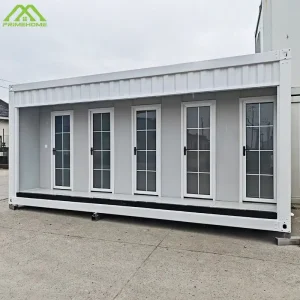
Wholesale Customized high-quality portable container toilets Prefabricated bathroom shower containers Supplier
Inquire Product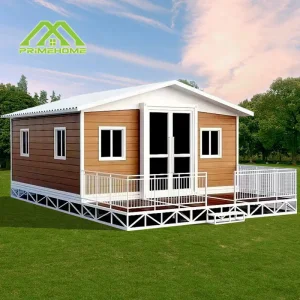
China Movable expansion box room Fold-out container homes Factory direct sales Collapsible container house
Inquire Product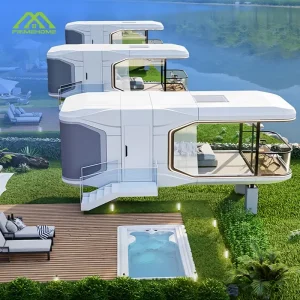
Custom Modern and fashionable Luxury design Camping cabins Prefabricated capsule rooms Beautiful and practical
Inquire Product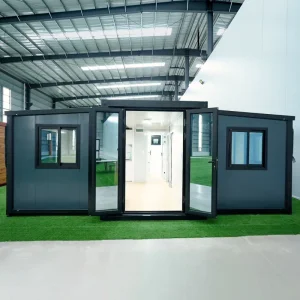
China 20FT Double Wing Factory Prefabrication Expandable Container House with Full Functional Layout Suppliers
Inquire Product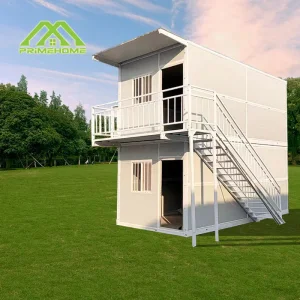
Wholesale Foldable container house Prefab modular homes Factory direct sales Easily movable Install quickly
Inquire Product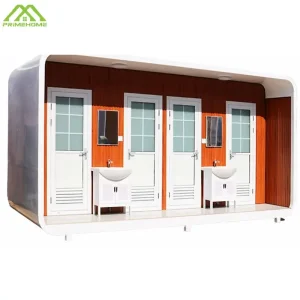
China Customized portable container toilets with sandwich panels suitable for public and private events Factory
Inquire Product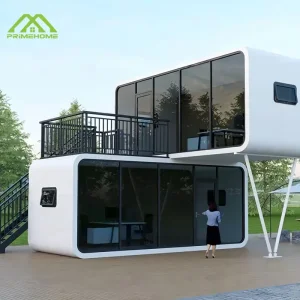
Custom Create your own multifunctional space and experience A new future lifestyle Factory direct sales of customized apple cabins
Inquire Product