
Industrial Modular Restroom & Portable Sanitation Units (Part 1)
Factory-direct prefabricated modular restrooms, expandable sanitary pods, and dry-wet separation container bathrooms built to rigorous global engineering specs.
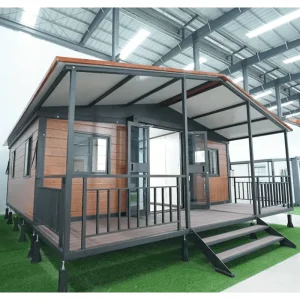
China Safe Sturdy Double Wing Expandable Container House with Terrace for Youth Outdoor Camping Study Activity Camps Manufacturers, Factories
Explore Specifications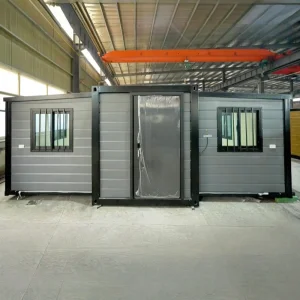
Custom 40FT Modern Prefab Modular Building High-End Custom Expandable Container House with Customized Interior Layout Manufacturer, Manufacturers
Explore Specifications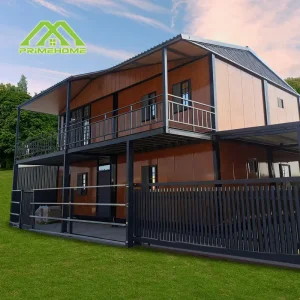
High-Quality Factory-direct sales of luxury residential modules, prefabricated park hotel duplex, fully furnished Supplier, Factory
Explore Specifications
China 20-year warranty on mobile prefabricated houses for quick deployment and move-in, complete with kitchen and bathroom Supplier, Suppliers
Explore Specifications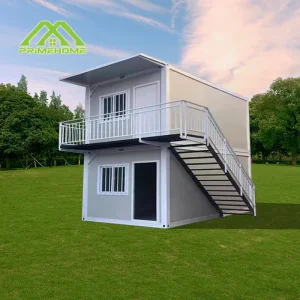
China Customized large-scale houses Prefabricated panel houses Prefabricated mobile homes and prefabricated outdoor container houses Manufacturers, Factories
Explore Specifications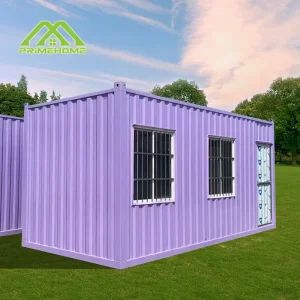
High-Quality 20ft 40ft stackable foldable modern flat pack container homes Direct-factory sales Low shipping costs Flexible FOB term Suppliers, Factories
Explore Specifications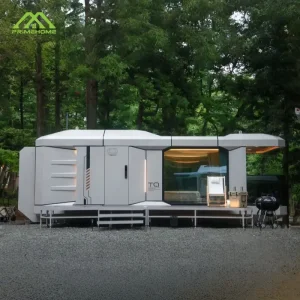
China Modular prefabricated housing Customized mobile capsule rooms Futuristic technological feel Made in China Suppliers, Factory
Explore Specifications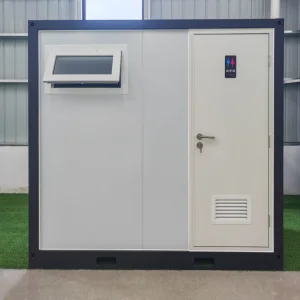
Wholesale Movable Reusable Prefab Dry Wet Separation Shower Bathroom Modular Portable Restroom With Glass Partition Manufacturer, Factory
Explore Specifications1. Global Market Landscape & Evolution of Portable Sanitation Systems
Analyzing macro-economic vectors, ESG mandates, and the shift from single-density polyethylene plastic toilets to fully-integrated modular prefabricated bathrooms.
The global commercial and industrial portable toilet and prefabricated bathroom market is undergoing a structural paradigm shift. Historically dominated by single-unit High-Density Polyethylene (HDPE) chemical toilets deployed temporarily on construction perimeters, modern infrastructure developers, municipal bodies, and commercial event organizers are now demanding high-integrity, climate-resilient, hygienic, and aesthetically sophisticated modular sanitary facilities. Driven by stringent global ESG (Environmental, Social, and Governance) mandates, occupational safety laws, and elevated user expectations, China has emerged as the global epicenter for precision manufacturing and design of modular container bathrooms, portable rest stations, and luxury off-grid sanitary modules.
As leading Chinese original equipment manufacturers (OEM) and original design manufacturers (ODM), factories in manufacturing hubs like Suzhou and Jiangsu leverage robust steel-structure supply chains, advanced fiberglass-reinforced plastic (FRP) molding, and automated assembly techniques. Today's commercial buyer is no longer purchasing just a temporary stall; they are procuring complex off-grid sanitary infrastructure units capable of handling high-frequency human traffic while maintaining thermal insulation, zero-leakage hydraulic containment, and low operational maintenance costs across decades of service life.
Key Trend: Paradigm Shift Toward Modular Dry-Wet Separation Systems
Modern off-site construction projects and luxury hospitality campsites mandate dry-wet separation layouts inside portable restrooms. By isolating shower stalls with tempered safety glass or high-performance sliding partitions, wet area moisture is prevented from compromising vanity zones, reducing bacterial propagation by up to 84% and cutting turn-around cleaning times in half.
2. Global Procurement Demand Analysis & B2B Buyer Criteria
Unpacking the decision factors for procurement officers, general contractors, site managers, and government relief agencies acquiring Chinese modular restrooms.
When enterprise clients search for a reliable "China Portable Toilet and Bathroom Manufacturer & Factory," their transactional and informational intents extend far beyond basic pricing queries. Professional buyers evaluate vendors across a complex array of structural engineering, regulatory, logistic, and total cost of ownership (TCO) variables. Whether equipping remote mining camps in Western Australia, disaster relief centers in Southern Europe, or glamping eco-resorts in North America, procurement teams systematically audit suppliers against specific operational thresholds.
| Buyer Segment | Primary Operational Focus | Technical & Compliance Demands | Preferred Factory Specs |
|---|---|---|---|
| EPC & Infrastructure Contractors | Rapid site deployment, high durability, stackability, heavy workforce usage. | ISO 9001 quality management, heavy-duty floor load limits (>3.5kN/m²), galvanized frame. | Flat-pack container toilets, modular multi-squat units, integrated macerator pumps. |
| Commercial Event & Expo Operators | Aesthetics, odor management, fast setup/teardown, VIP dry-wet options. | CE compliance, silent vacuum flushing systems, smart LED lighting, luxury composite walls. | Movable trailer bathrooms, glass partition dry-wet separation suites, stainless fittings. |
| Eco-Resorts & Glamping Developers | Futuristic design integration, off-grid water recycling, guest comfort. | Thermal insulation (PU core density 42kg/m³), UV resistance, low-flow eco plumbing (UPC/IPC). | Panoramic Apple Cabins, Space Capsules with fully-furnished interior bathrooms. |
| Municipal & Relief Agencies | Zero-delay supply capacity, low cost per unit, extreme weather resilience. | EN 1090 structural standard, fireproofing (Class A1 rock wool), vandal-proof hardware. | Foldable container toilets, quick-deploy single/double unit sanitary pods. |
Shipping bulk volumetric structures across international waters represents up to 35% of total landed cost. Leading Chinese factories solve this through modular flat-pack engineering and double-wing expansion systems. By shipping knocked-down frame modules or nested panels inside standard 40ft High Cube shipping containers, freight costs per functional bathroom unit are reduced by up to 60%, delivering massive information gain and cost efficiency to global procurement teams.
3. Technical Engineering Architecture of Modern Portable Bathrooms
Understanding structural galvanization, hydraulic piping design, leakproof pan fabrication, and thermal envelope integrity.
Structural Frame & Corrosion Defense
Industrial portable bathrooms utilize hot-dip galvanized structural steel (Q235B or Q355 grade) forming a rigid chassis. Sub-frame profiles are cold-formed and treated with electrostatic fluorocarbon powder coatings to withstand continuous moisture, caustic cleaning detergents, and coastal salt mist atmospheres rated up to ISO 12944 C4/C5 environments.
Monolithic Leakproof Floor Basins
Water damage is the primary cause of prefab bathroom failure. Chinese manufacturers eliminate floor pan seams by employing continuous, resin-infused Fiberglass Reinforced Plastic (FRP) pans or heavy-gauge embossed aluminum diamond plate bases with turned-up 100mm perimeter water-barrier cuffs, guaranteeing 100% water tightness under high hydraulic load.
Thermal Envelope & Acoustic Isolation
Wall systems feature high-density Polyurethane (PU) sandwich panels or A1 Class non-combustible Rock Wool core panels (50mm to 100mm thickness). This envelope maintains interior climate comfort in ambient temperatures ranging from -30°C to +50°C while damping acoustic transmission between adjacent stall units.
Advanced hydraulic engineering within Chinese modular bathroom units incorporates dual-pipe graywater/blackwater segregation systems. Wastewater from lavatories and shower basins is routed through secondary filtration grids suitable for greywater recycling, whereas toilet discharge is diverted to high-torque macerator pumps or vacuum-assisted discharge manifolds capable of vertical lift heights up to 7 meters and horizontal pump distances exceeding 50 meters.
4. Localization, Plumbing Standards & Sustainability Frameworks
Ensuring seamless site integration across global jurisdictions with certified electrical, plumbing, and environmental compliance.
A frequent challenge encountered during international modular building procurement is discrepancy in regional plumbing and electrical codes. Reputable Chinese manufacturers systematically overcome these friction points through factory-level customization tailored to destination market regulations:
Electrical & Water Code Compliance
North America: Pre-wired conduits complying with UL standards, 110V/60Hz configurations, GFCI outlets, and UPC/IPC certified PEX water supply lines.
Europe & Australasia: CE marked components, 230V/50Hz wiring adhering to IEC 60364, WaterMark certified tapware, and AS/NZS 3500 plumbing standard compliance.
Accessible & Universal Design (ADA)
Manufacturing specialized barrier-free sanitary units engineered to Americans with Disabilities Act (ADA) and ISO 21542 accessibility parameters. Features include outward-swinging 900mm+ clear width doors, integrated grab rails, low-threshold ramp entryways, and wide-turning radius internal floor plans.
For environmentally sensitive zones, national parks, and remote sites lacking sewer mains, Chinese factories deploy standalone eco-sanitation systems. These combine rooftop solar PV arrays to power inline waste treatment micro-reactors, closed-loop water filtration units that clarify washbasin runoff, and waterless thermostatic composting toilets that convert human waste into pathogen-free organic biomass without municipal hookups.
5. Technology Roadmap & Future Innovations (2025–2030)
Exploring IoT telemetry, autonomous sanitation maintenance, and ultra-light carbon composite modular structures.
IoT Smart Telemetry Nodes
Integration of low-power Narrowband-IoT (NB-IoT) sensors directly into wasteholding tanks, freshwater reservoirs, and consumable dispensers. Real-time telemetry dashboards transmit tank fill levels, odor concentration indexes (VOC levels), and door opening counts directly to site management platforms.
Automated UV-C Self-Sterilization
Next-generation luxury capsules and public sanitary modules feature automated UV-C disinfectant cycles. Upon user exit, door sensors trigger high-intensity 254nm ultraviolet sterilizing lamps and micro-atomizing disinfectant foggers that sanitize all interior surfaces in under 90 seconds.
High-Density Recyclable Composite Frames
Pioneering the transition from heavy steel chassis to ultra-lightweight carbon-reinforced polymeric profiles. These composites eliminate all structural rust risks while decreasing transport tare weight by 38%, maximizing container loading ratios and lowering shipping carbon footprint.
Modular Housing & Prefabricated Sanitary Units (Part 2)
Browse our full range of customizable expandable container houses, apple cabins, single/multi-unit restrooms, and accommodation pods.
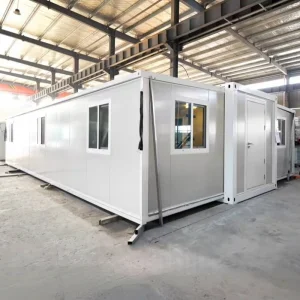
High-Quality Cost Effective 40FT White Prefabricated Expandable Container House 5 Bedrooms Modular Staff Worker Dormitory Manufacturer, Manufacturers
Explore Specifications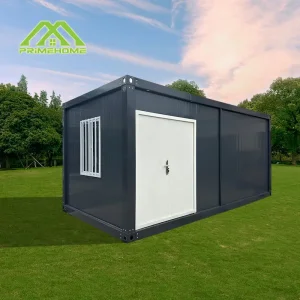
Custom Modern and stylish prefabricated flat pack container houses Compact glass-paneled container homes Easy-to-assemble small-sized suitable for outdoor use Cost-effective Supplier, Factory
Explore Specifications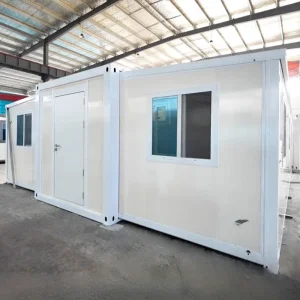
Custom 30FT 56sqm Living Space Prefab Expandable Container House with Private Bathroom for ADU Housing Accommodation Dormitory Supplier, Factories
Explore Specifications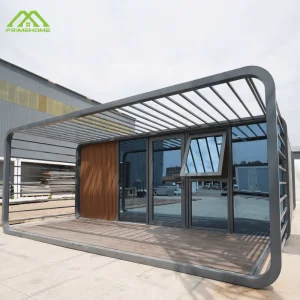
High-Quality High Quality EU Standard Prefab Apple Cabin with Galvanized Steel Frame Removable Low Cost Custom Container House Suppliers, Factory
Explore Specifications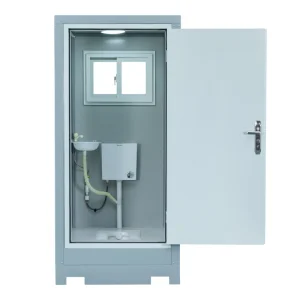
High-Quality Prefab Mobile Outdoor Toilet Portable Squat Toilet Single Unit for construction sites temporary event venues Manufacturers, Factory
Explore Specifications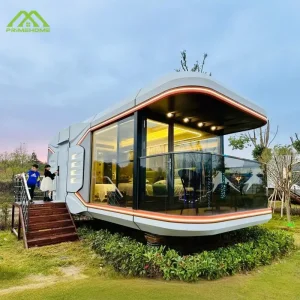
High-Quality Wholesale fully furnished luxury prefabricated capsule rooms Mobile creative hotels Modular spacecraft-style capsule house Suppliers, Factory
Explore Specifications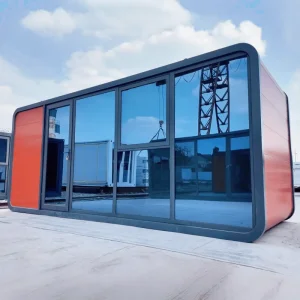
Wholesale Ready to Ship 20ft 40ft Modern Apple Cabin Luxury Glamping Capsule House with One-Piece Shipment and Fast Lead Time Manufacturers, Suppliers
Explore Specifications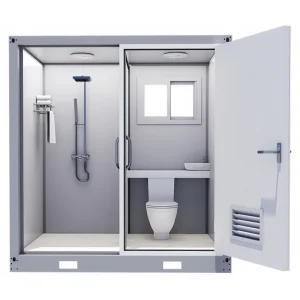
High-Quality Factory Pre-finished Customized Prefab Restroom With Shower Indoor Glass Wall Bathroom Manufacturer, Factory
Explore Specifications6. Frequently Asked Questions (FAQ) — B2B Procurement Guide
Expert answers regarding structural engineering, shipping logistics, customization capabilities, and factory quality standards.
How do Chinese portable bathroom manufacturers ensure 100% floor waterproofness?
Quality Chinese factories utilize a multi-barrier waterproofing approach. First, structural floor plates are fitted with a continuous, seamless resin-infused Fiberglass Reinforced Plastic (FRP) pan or a heavy-duty welded aluminum checker plate tray. Perimeter edges feature a 100mm to 150mm upward wall flange (cuff) so no water can migrate into wall sandwich panels. Additionally, all floor drains and pipe penetrations are factory sealed with industrial polyurethane sealants and pressure-tested for 48 hours prior to container loading.
Can the plumbing and electrical systems be customized to meet US (UPC/ADA) or European (CE) codes?
Yes. OEM/ODM production lines routinely customize plumbing diameters, thread standards (NPT for Americas, BSP for Europe/Asia), and electrical systems. For North America, units are configured with UL-listed wiring, GFCI circuit breakers, 110V/60Hz voltage specs, and UPC/IPC compliant PEX piping. For European installations, units feature CE certified distribution boxes, 230V systems, and ISO-compliant sanitary fixtures, including full ADA-compliant wheel-chair accessible layouts.
What is the expected structural service life of a prefabricated container bathroom?
When engineered with hot-dip galvanized Q235B/Q355 steel mainframes and protected with C4/C5 marine-grade anti-corrosion fluorocarbon coatings, the main structural chassis has a design lifespan of 20 to 30 years. Internal wall panels, glass partitions, and replaceable sanitary hardware carry operational lifespans of 10 to 15 years under high-frequency commercial use, with spare parts readily shippable via container cargo.
How are portable toilets and modular bathrooms shipped to minimize sea freight costs?
Depending on the product series, units are shipped in one of three optimized formats: (1) Flat-Pack Knock-Down: Up to 6 complete modular bathroom pods pack flat inside a single 40ft HQ container; (2) Foldable / Expandable Modules: Shipped as standard ISO dimension units that unfold on-site within 15 minutes; or (3) Fully Assembled Plug-and-Play Pods: Shipped as complete volumetric modules inside 40ft Open Top or High Cube containers for immediate utility hookup.
What off-grid waste treatment options are available for locations without municipal sewer connections?
For off-grid sites, factories integrate three primary solutions: (1) High-capacity integrated polyethylene waste holding tanks beneath the floor frame with camlock pump-out valves; (2) Heavy-duty electric macerator grinding pumps that transfer slurry through narrow 2-inch PVC lines over long distances; or (3) Biological composting and solar-powered graywater purification systems that eliminate the need for liquid waste hauling.
What is the typical production lead time for bulk B2B commercial orders?
Standard prototype or sample units take 7 to 10 working days. Commercial project orders (e.g., 20 to 100 units) feature typical factory production lead times of 15 to 25 calendar days. Accelerated emergency dispatch protocols are available for government disaster relief projects.