
Top Factory-Direct Container Units
Explore our engineering-grade prefabricated expandable homes, smart space capsules, and glamping cabins pre-fitted for solar PV and battery integration.
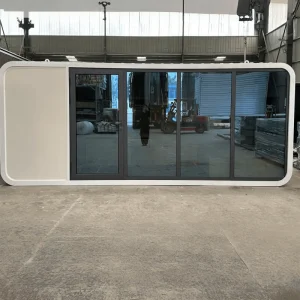
High-Quality 20ft Compact Budget Prefab Apple Cabin with Private Bathroom
View Product Specs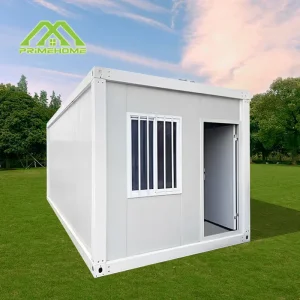
Portable Flat Pack Mini-House with Metal Frame & Private Bathroom
View Product Specs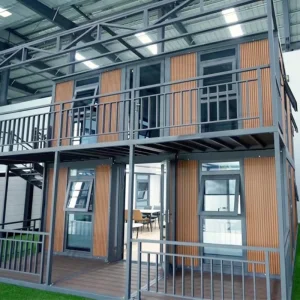
China Two Story Prefab Villa Expandable Container House Modern Layout
View Product Specs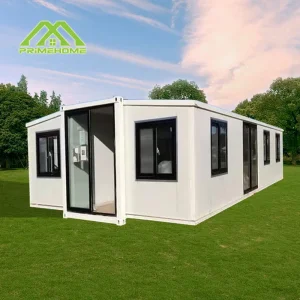
China 3 in 1 Double-Wing Foldable Soundproof Expandable Luxury Villa
View Product Specs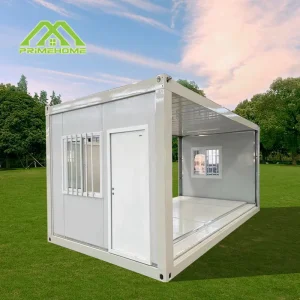
Custom Portable House for Outdoor Group Building & Event Rest Area
View Product Specs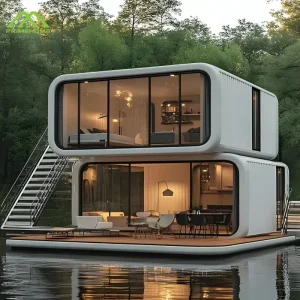
Wholesale Compact Smart Apple Cabin Garden Pod & Resort Hotel Pods
View Product Specs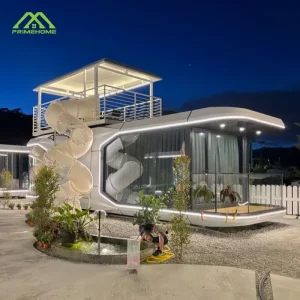
Custom Industrialized Intelligent Luxury Space Capsule Plug-and-Play
View Product Specs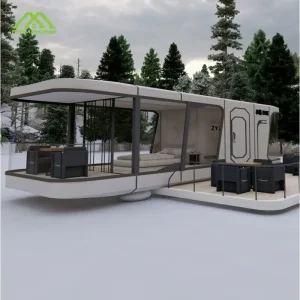
Wholesale Luxury Camping Cabin Steel Smart Space Capsule Dwellings
View Product SpecsThe Next Generation of Off-Grid Modular Infrastructure
How Chinese solar container house manufacturers are standardizing Building-Integrated Photovoltaics (BIPV) to deliver carbon-neutral, rapidly deployable residential and commercial real estate globally.
Grid-Independent Autonomy
Modern solar-powered container homes engineered in China no longer rely on external grid hookups. By unifying high-efficiency N-Type TOPCon solar panels, smart MPPT controllers, and commercial-grade LiFePO4 energy storage systems (ESS), these units guarantee 100% continuous operational autonomy even in harsh off-grid topographies.
Structural & Thermal Engineering
Using hot-dip galvanized structural steel frames (Q235B/Q355B) and high-density polyurethane (PU) or rockwool core sandwich panels, Chinese manufacturers achieve thermal transmission coefficients as low as U = 0.18 W/m²K, minimizing HVAC power draw and maximizing solar energy ROI.
Rapid Deployment Timelines
Prefabrication allows 90% of electrical, plumbing, BIPV mounting, and interior finishing to occur off-site. On-site installation times are reduced from months to a mere 2 to 6 hours for expandable and foldable models, significantly cutting site labor expenditure for international EPC contractors.
China Factory 4.0: Supply Chain Resilience & Scale Efficiency
Analyzing the industrial advantages that enable Chinese manufacturers to deliver fully integrated solar container homes at unmatched cost-to-performance metrics.
1. Vertical Integration of Solar & Steel Ecosystems
China produces over 80% of the world's solar PV components and controls the primary supply chain for structural steel. Factories located in manufacturing hubs like Jiangsu (Suzhou) and Guangdong directly source raw steel coils and automated solar laminate production under one unified roof. This proximity eliminates multi-tiered distributor markups and guarantees stringent quality control from raw material to final container housing module.
2. Automated Robotic Welding & Precision BIPV CNC Machining
Factory 4.0 facilities utilize 6-axis robotic arms for continuous structural seam welding, ensuring ISO-compliant frame rigidity and zero-leakage tolerances. Structural mounting tracks for rooftop BIPV and expandable side-wall PV panels are CNC-machined directly into the galvanized steel ribs, eliminating thermal bridging and preventing mechanical vibration damage during international ocean freight transport.
3. Economies of Scale & Cost Dynamics
By standardizing 20ft, 30ft, and 40ft modular dimensions, Chinese manufacturers leverage high-volume production runs. Procurement teams benefit from standardized ISO corner fittings, standardized sandwich panel dimensions, and unified electrical wire harnesses. The outcome is a 35% to 50% reduction in total capital expenditure (CapEx) compared to European or North American modular builders.
Quality Assurance Protocols in Leading Chinese Modular Factories
Top-tier Chinese container home suppliers implement rigorous multi-stage quality gates: Hydro-testing (checking watertight seals under simulated 120 mm/hr tropical rainfall), Dielectric Withstand Testing on solar wire looms (up to 1,500V DC), and Static Load Deflection Testing on roof spans to guarantee compliance with global snow load requirements (1.5 kN/m²).
Technical Roadmap & BIPV System Integration
Discover the precise engineering mechanics behind Building-Integrated Photovoltaics (BIPV), battery microgrid topology, and passive thermal design in off-grid container homes.
| Subsystem Component | Engineering Specifications & Standards | Operational Performance Benefit |
|---|---|---|
| Solar PV Technology | Monocrystalline TOPCon / PERC BIPV Roof & Wall Panels (450W - 670W/panel) | 22.5%+ module efficiency, high light absorption at anti-glare angles, low temperature coefficient (-0.30%/°C). |
| Energy Storage (ESS) | LiFePO4 (Lithium Iron Phosphate) Battery Banks (48V / 51.2V, 10kWh to 30kWh) | 6,000+ deep discharge cycles @ 80% DoD, integrated smart BMS with thermal runaway fire protection. |
| Inverter & Microgrid | Hybrid Off-Grid Pure Sine Wave Inverter (5kW to 15kW, Dual MPPT Tracking) | Seamless grid/generator transfer (< 10ms), 97.5% peak conversion efficiency, programmable load shedding. |
| Structural Frame | Hot-Dip Galvanized Q355B Steel Ribs + C4 Industrial Marine Anti-Corrosion Coating | Resists salt-spray corrosion for 25+ years, seismic Zone 8 structural rating, 180 km/h wind load rating. |
| Thermal Insulation | 50mm - 100mm Polyurethane (PU) or Hydrophobic Rockwool (120kg/m³) + Low-E Glazing | Calculated U-value = 0.18 - 0.24 W/m²K, fire retardant Grade A rating, acoustic reduction up to 42 dB. |
BIPV vs. Traditional Bolt-On Solar
Building-Integrated Photovoltaics (BIPV) replace traditional corrugated container roof sheets with structural, weather-tight solar glass laminates. This eliminates penetrations in the container roof, mitigating leakage risks while reducing structural weight by up to 18% compared to heavy rack-mounted solar systems.
Smart Microgrid Energy Management (EMS)
Next-generation Chinese solar container homes integrate IoT-enabled Energy Management Systems. The central controller continuously balances PV generation, battery state of charge (SoC), indoor HVAC load, and auxiliary generator auto-start triggers via CAN-bus communication, accessible remotely via mobile app.
Macro Industry Solutions & Deployment Scenarios
From luxury eco-resorts in remote islands to heavy industrial mining camps and emergency response housing, explore how solar container units adapt to complex global demands.
1. Glamping & Eco-Resort Lodging
Deliver premium 5-star off-grid hospitality experiences in protected national parks or remote coastal sites without laying expensive power grid infrastructure. Smart space capsules and apple cabins feature panoramic Low-E glass, concealed BIPV roofs, and silent battery power for uninterrupted guest comfort.
2. Remote Mining & Construction Camps
Reduce diesel fuel transportation costs for off-grid worker housing complexes by up to 70%. Expandable 20ft and 40ft container homes fold compact for high-density shipping and unfold into multi-room dormitories with integrated solar-battery power units.
3. Disaster Relief & Emergency Command
In post-disaster zones where municipal utilities are disrupted, foldable solar container shelters provide immediate self-powered operational centers, mobile clinics, and clean water filtration hubs within minutes of unloading from flatbed trucks.
4. Remote Scientific Outposts
Designed for extreme thermal envelope performance in sub-zero or desert conditions. Heavy-duty sandwich panels paired with high-capacity LiFePO4 heating jackets ensure scientific instruments and living quarters remain powered through extreme weather events.
Localization Support & Compliance Standards
Ensuring smooth import, building code sign-off, and electrical certification across North America, the European Union, Australia, and the Middle East.
North America (US & Canada)
• Structural: Built to International Building Code (IBC) structural loading specifications.
• Electrical: UL 1741 compliant hybrid inverters, UL 1973 battery packs, and NEC 2020/2023 rapid shutdown compliant solar wiring.
• Plumbing: UPC / CSA certified PEX water lines and drainage fittings pre-installed.
European Union (EU)
• Structural Steel: EN 1090-1 / ISO 3834-2 factory production control certification for structural steel fabrication.
• Electrical & Solar: CE marked solar arrays, Low Voltage Directive (LVD) and EMC compliance for all electrical distributions.
• Thermal: Meets EN ISO 10077 thermal insulation performance metrics.
Australia & New Zealand
• Electrical Code: Pre-wired strictly in compliance with AS/NZS 3000 (Wiring Rules) and AS/NZS 5139 for battery storage safety.
• Structural Winds: Engineered for Wind Region C/D (cyclonic rating) with reinforced tie-down anchor plates.
• Termite & Fire: Non-combustible steel walls conforming to AS 1530.1.
Factory Voltage & Frequency Customization
All solar inverters, internal wiring sockets (Type B, Type F, Type G, Type I), and HVAC units are customized during assembly to match your destination grid system: 110V/120V 60Hz Split-Phase for the Americas, or 220V/230V/240V 50Hz/60Hz Single-Phase / 3-Phase for Europe, Australia, and Africa.
Global Enterprise Procurement & Total Cost of Ownership
Comparing 10-year financial metrics: Prefabricated Off-Grid Solar Container Homes vs. Traditional On-Site Construction.
| Financial & Operational Metric | Traditional On-Site Build | Off-Grid Solar Container Home | Enterprise Savings Advantage |
|---|---|---|---|
| Initial Build CapEx ($/sq.m) | $1,500 - $3,000 / sq.m | $450 - $950 / sq.m | 50% - 70% CapEx Reduction |
| Construction Timeline | 6 to 14 Months | 2 to 4 Weeks (Factory) + 1 Day (Site) | 85% Faster Revenue Realization |
| Utility Connection Cost | $15,000 - $60,000 (Trenching/Grid Hookup) | $0 (100% Self-Sustaining Solar ESS) | Immediate Utility CapEx Elimination |
| 10-Year Electricity OpEx | High ($0.15 - $0.40 / kWh Grid Rates) | Near Zero (Free Solar Energy Generation) | 100% Protection against energy inflation |
| Relocability & Residual Value | Zero Mobility (Sunk Site Cost) | High Mobility (Asset can be moved & resold) | Long-Term Balance Sheet Asset Protection |
Shipping & Logistics Freight Optimization
Flat-pack and foldable container models are optimized for sea freight logistics. Up to 4 to 6 collapsed units can fit inside a single 40ft HQ ocean container, reducing ocean freight shipping costs per square meter of living space by up to 75% compared to fully built rigid modules.
B2B Procurement Lifecycle Support
Leading Chinese factories provide end-to-end EPC procurement assistance: CAD floor plan customization, 3D architectural rendering, factory acceptance testing (FAT) via live video link, customs clearance document preparation (CO, Form E, Form F), and dedicated engineer site dispatch.
Frequently Asked Questions for B2B Importers
Comprehensive engineering and procurement answers regarding off-grid performance, solar capacity, battery degradation, and weather limits.
How many days of off-grid power autonomy do the solar battery systems provide during continuous rain or cloud cover?
Our standard solar container homes are engineered with a minimum of 3 to 5 days of complete off-grid autonomy based on typical residential baseline loads (LED lighting, refrigeration, communication devices, and eco-HVAC operation). The onboard LiFePO4 battery bank can be scaled up from 10kWh to 30kWh+ depending on project requirements. Furthermore, our microgrid hybrid inverters include an auto-start terminal for dual-fuel backup diesel generators if battery SoC drops below 15%.
Can the solar panel roof withstand extreme hail, high wind uplift, and heavy snow loads?
Yes. The Building-Integrated Photovoltaic (BIPV) panels utilize 3.2mm or 4.0mm double-pane tempered glass engineered to withstand hail impact up to 35mm at terminal velocity. Roof frames are rated for snow loads up to 1.5 kN/m² and dynamic wind pressures corresponding to Category 4 typhoons (up to 180 km/h) when properly anchored to concrete pad foundations.
What is the expected lifespan and degradation cycle of the LiFePO4 battery bank and solar panels?
The LiFePO4 lithium batteries deliver over 6,000 cycles to 80% Depth of Discharge (DoD), translating to roughly 15 years of daily operation under normal ambient temperature ranges. The N-Type TOPCon solar panels come with a 25-year linear performance warranty, guaranteeing at least 87.4% of original power output at Year 25.
How are units packaged to prevent corrosion during months of ocean transport?
All finished steel elements feature hot-dip galvanization and marine-grade C4 anti-corrosion paint coatings. Before loading into sea freight containers, modules are sealed with multi-layer heavy-duty polyethylene shrink wrap containing industrial vapor corrosion inhibitors (VCI) to protect electronic controls, solar inverters, and interior finishes against saline maritime air.
Can internal layout, kitchen cabinetry, and bathroom fixtures be customized to local codes?
Absolutely. Our internal engineering department adapts CAD architectural drawings according to your exact requirements. Plumbing systems can be supplied under US UPC, European EN, or Australian AS/NZS standards. Kitchen cabinets, sanitary fixtures, floor coverings (SPC stone plastic composite flooring), and internal partitions are fully customizable in colors, materials, and dimension configurations.
What foundation preparation is required prior to container delivery on site?
Due to the rigid self-supporting steel chassis, complex full-slab concrete foundations are rarely required. Sites typically only require point piers (concrete footings at the ISO corner casting points), strip foundations, or helical screw piles. Detailed foundation loading diagrams and anchor point coordinates are provided by our technical team prior to shipment.
More Factory Direct Prefab & Modular Cabins
Compare expandable container homes, weatherproof carved-panel cabins, and homestay space capsules ready for global logistics dispatch.
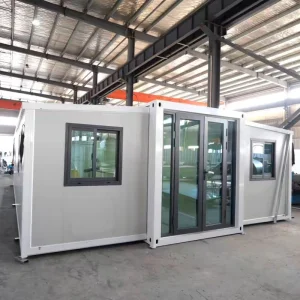
Wholesale 30FT White Expandable Container House 56㎡ 2 Bedrooms Layout
View Product Specs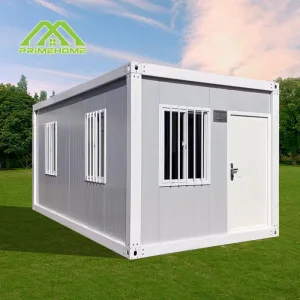
Wholesale Luxury Rapid Portable Expandable Prefabricated Villa Container House
View Product Specs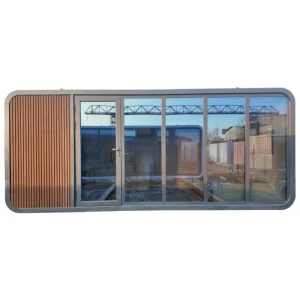
Custom Weatherproof Metal Carved Panel Apple Cabin Anti-Corrosion Lodge
View Product Specs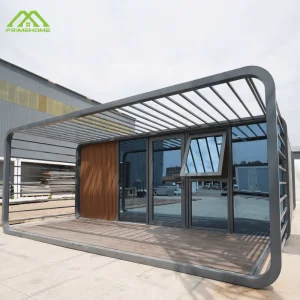
High-Quality EU Standard Prefab Apple Cabin Galvanized Steel Frame
View Product Specs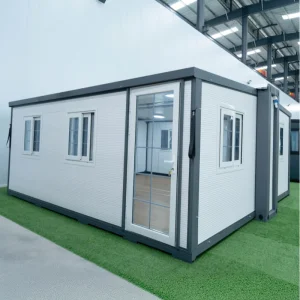
Custom F700 Expandable Container House White Exterior Left-Side Glass Entry
View Product Specs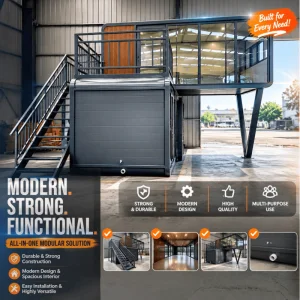
Container Homestay Apple Capsule Sunroom Mobile Hotel & Pop-Up Shop
View Product Specs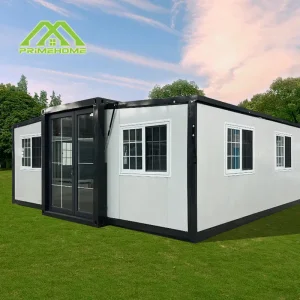
Wholesale High-Quality Single & Double-Wing Expandable Modular Houses
View Product Specs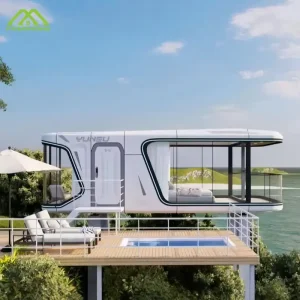
Custom Popular Capsule Cabins Outdoor Sleep Villa Mobile Hotel Pods
View Product SpecsRequest Engineering CADs & Factory Pricing Today
Partner directly with China’s premier solar container house manufacturer. Obtain full structural calculations, solar sizing analysis, and customized FOB/CIF freight quotations for your project site.