
-
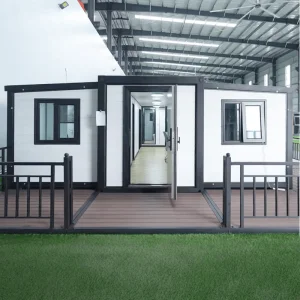 High-Quality Luxury 40FT Double Wing Expandable Container Villa Glamping Resort House Custom Modular Prefab House Supplier, Suppliers
 -
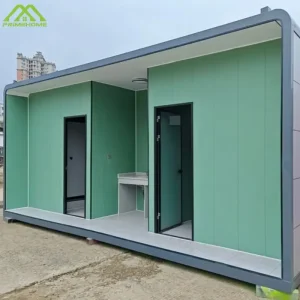 Custom Prefabricated restroom unit Portable toilet Prefabricated bathroom unit Factory, Factories
 -
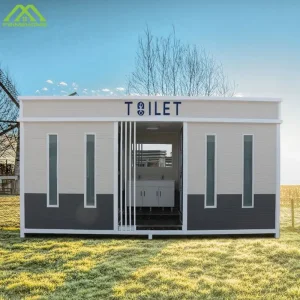 High-Quality Luxurious prefabricated container toilet Modern design Sandwich panel wall Fast installation Manufacturers, Factory
 -
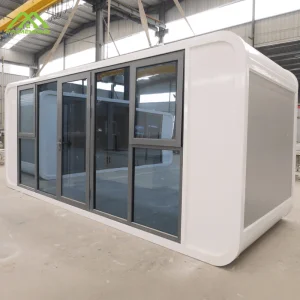 Wholesale Durable Shipping Container Houses A Frame Buildings Container Restaurants Pop-up Shops Budget Villas and Homestays for Holiday Resorts Manufacturer, Suppliers
 -
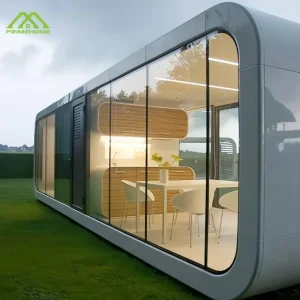 Custom Custom-designed apple pod Vacation rentals: creating high-end and comfortable travel experiences Movable, modular and trendy apple cabins for accommodations Manufacturers, Supplier
 -
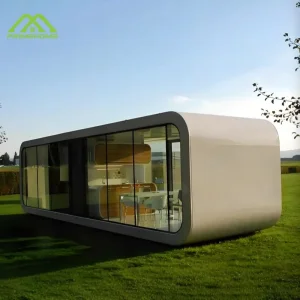 Wholesale Portable stylish mini cabin with window and bathroom iPhone-shaped capsule room Perfect for outdoor camping trips Manufacturer, Suppliers
 -
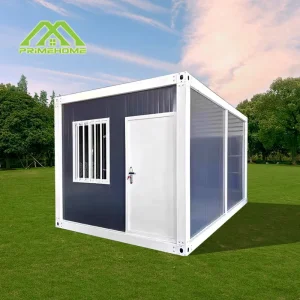 China Modern architecture Exceptionally cost-effective Prefabricated Modular Homes Ultra-fast installation Manufacturer, Manufacturers
 -
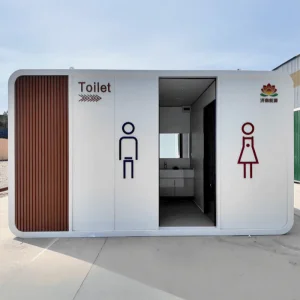 China Modular Apple Capsule Toilet with Modern Minimalist Appearance Safe and Sturdy Steel Structure Resort Toilet Supplier, Factories
1. Global Industrial Landscape of Construction Site Sanitation & Modular Welfare Facilities
Analyzing regulatory shifts, labor welfare enforcement, ESG benchmarks, and the operational transition toward heavy-duty, climate-insulated temporary toilets on enterprise project sites.
Strict Regulatory Compliance
Global regulatory frameworks such as OSHA 1926.51 in the United States, EU Directive 92/57/EEC in Europe, and Safe Work Australia standards mandate strict minimum ratios of sanitary facilities per worker count. Modern compliance requires running water, anti-slip flooring, adequate ventilation, and gender-segregated units.
Workforce Welfare & Productivity
Substandard site sanitation directly causes operational downtime, increased absenteeism, and health hazards. Upgrading from basic single-skin chemical plastic cubicles to fully engineered, insulated modular container toilets improves worker morale, safety, and productivity on multi-year civil infrastructure projects.
ESG & Total Cost of Ownership (TCO)
Tier-1 general contractors are shifting focus from initial capital expenditure to lifetime ROI. Robust steel-frame container toilets offer a 15+ year operational lifespan, surviving multiple project relocations while reducing water waste through low-flow vacuum and dual-flush technologies.
Across mega-infrastructure projects—ranging from cross-country high-speed railway corridors and deep-sea port developments to high-density commercial skyscrapers—the traditional single-molded plastic portable chemical toilet is rapidly becoming obsolete. International general contractors now demand heavy-duty, hygienic, and scalable modular restroom container units. These structures must withstand harsh environmental conditions, ranging from sub-zero Arctic wind loads to extreme tropical heat, while remaining easy to clean, relocate, and reconfigure for subsequent project phases.
2. Chinese Manufacturing Efficiency & Technological Superiority
Why sourcing temporary construction site toilets and modular container facilities directly from Suzhou/Jiangsu industrial hubs provides unparalleled cost-to-quality performance and scale.
Unrivaled Industrial Clustering
Located in the heart of China’s prefabricated building ecosystem (Suzhou, Jiangsu), manufacturers leverage complete domestic supply chains for hot-dip galvanized steel profiles, high-density polyurethane (PU) sandwich panels, anti-bacterial ceramic fixtures, and marine-grade protective coatings under one roof.
Automated Robotic Production
Modern Chinese manufacturing facilities utilize automated cold-roll forming, robotic laser welding, and automated powder coating production lines. This guarantees structural millimeter precision, flawless seam sealing, and consistent anti-corrosion protection that eliminates structural warping over extended heavy-duty site use.
Massive Production Capacity
With production facilities scaling over 28,000 m² and monthly yields exceeding 5,000 modular units, Chinese manufacturers offer international EPC contractors unmatched lead-time reliability. Large orders for multi-unit camp sanitation can be customized, fabricated, and packed for shipment within 14 to 21 days.
Information Gain: Factory-Direct Customization Engine
Unlike Western distributors who resell standard off-the-shelf units with fixed floor plans, direct Chinese OEM/ODM manufacturers like PrimeHome provide full structural engineering design. Plumbing layouts can be mirrored, electrical systems customized to global voltages (110V/220V/380V), and frame steel gauges adjusted up to 4.0mm structural thickness for extreme wind or seismic conditions.
3. Technical Engineering Architecture of Modular Construction Restroom Units
A granular breakdown of structural framing, sandwich panel insulation, plumbing schematics, and waste management technologies engineered for severe industrial environments.
| Component Category | Standard Specification | Heavy-Duty / Extreme Environment Upgrade | Operational Benefit |
|---|---|---|---|
| Main Structural Frame | Q235B Cold-formed galvanized steel profiles (2.5mm - 3.0mm) | Q355B Hot-dip galvanized structural steel (3.5mm - 4.0mm) + Epoxy zinc primer | Prevents rust in high-humidity/coastal sites; supports multi-story stacking up to 3 tiers. |
| Wall & Roof Insulation | 50mm EPS / Rockwool sandwich panel (Density: 50kg/m³) | 75mm - 100mm High-Density Polyurethane (PU) injected panel (R-value > 22) | Thermal insulation maintains comfortable interior temperatures from -30°C to +55°C. |
| Sub-Floor System | 18mm Fiber Cement Board + 1.5mm anti-slip PVC vinyl sheet | 2.0mm Patterned Aluminum Chequered Plate + Waterproof Sealant Membrane | Complete resistance to water rot, chemical cleaning agents, and high-foot-traffic abrasion. |
| Sanitary Piping & Fixtures | PEX supply lines, PVC drain lines, standard ceramic gravity-flush toilets | HDPE anti-clogging main lines, Stainless steel 304 squatting/seated pans + Vacuum flush | Eliminates pipe scaling and blockage; reduces maintenance call-outs by 80%. |
| Ventilation & HVAC | 120 CFM Wall-mounted waterproof exhaust fan | Dual-zone fresh air exchanger + Inverter AC (Heat/Cool) + Negative pressure unit | Rapid odor evacuation and humidity control; maintains fresh interior hygiene continuously. |
| Electrical Standard | Concealed IP54 wiring, LED ceiling strip lights, regional sockets (CE certified) | Explosion-proof/IP65 conduits, solar off-grid battery integration, smart occupancy sensors | Ensures absolute electrical safety in wet environments and remote zero-grid locations. |
Blackwater & Waste Treatment Integration
Construction site toilets produced by leading Chinese suppliers offer versatile waste handling options. Units can be engineered for direct municipal sewer tie-in, integrated beneath-floor blackwater holding tanks with quick-disconnect truck suction valves, or coupled with compact biological aerobic septic tanks for fully off-grid locations.
Vandal-Resistant Interior Engineering
For high-density labor camps, internal fittings are selected for extreme durability. Stainless steel 304 vandal-proof mirrors, spring-loaded self-closing faucets, recessed anti-tamper LED lighting, and integrated wall floor drains allow the entire interior to be power-washed safely without short-circuiting electrical channels.
4. Global Field Deployment Scenarios & Tailored Configurations
Examining how modular toilet containers and prefab restroom blocks are customized to meet unique climate, geographical, and operational requirements around the globe.
High-Density Urban Skyscraper Sites
In cramped city-center construction sites with limited footprint, crane-liftable 20ft container toilet blocks are deployed on top of active floor plates as buildings rise. Lightweight, rigid frame designs allow easy crane hoisting between floors, saving workers up to 30 minutes per shift in elevator descent time.
Remote Mining Camps & Oil Operations
Operating in harsh locations such as Australia’s Outback, Canada’s Oil Sands, or the Atacama Desert demands heavy-duty insulated container restrooms equipped with massive internal water storage tanks, booster pumps, and solar array battery back-ups capable of operating 100% off-grid.
Disaster Relief & Emergency Response
When humanitarian crises, floods, or earthquakes strike, quick-deploy foldable or flat-pack container toilets are airlifted or trucked in bulk. A single 40HQ container can carry up to 10 flat-pack toilet units, which can be fully assembled by non-specialized crews within 45 minutes per unit.
Public Infrastructure & Linear Works
For highway construction, pipeline laying, and rail line development where the site constantly moves, containerized mobile toilets mounted on heavy-duty skid runners or trailer chassis allow smooth towing along the work corridor as progress advances.
Eco-Resorts & Glamping Outposts
Beyond traditional industrial sites, sleek Apple Pods and futuristic Space Capsule toilets with double-glazed panoramic smart-tint glass are deployed in eco-tourist resorts, national parks, and high-end outdoor glamping sites requiring zero permanent masonry foundations.
5. Global Enterprise Procurement Criteria & Logistics Engineering
A comprehensive framework for international EPC buyers, procurement officers, and distributors evaluating container toilet modular systems for overseas shipment.
Shipping Format Optimization
Transportation logistics often represent 20% to 35% of total landed cost. Professional suppliers offer three distinct delivery configurations:
- Flat-Pack (SOC): 4 disassembled units bundled into a standard ISO 20ft container footprint. Drastically cuts ocean freight cost.
- Fully Assembled Module: Delivered pre-plumbed and pre-wired; simply crane off the truck and connect utilities. Ideal for tight project deadlines.
- Detachable Knock-Down: High density packing where up to 12 complete toilet units fit inside a single 40ft HQ shipping container.
International Structural & Plumbing Certifications
Procurement teams must ensure imported units meet destination country regulations:
- Structural Integrity: CE marking compliance, EN 1090 steel frame welding standards, wind resistance certified up to 180 km/h.
- Electrical Safety: UL/CSA compliant wiring for North America; SAA certification for Australia/New Zealand; CE/CB for Europe.
- Water & Sanitation: WaterMark certified brass valves, WRAS approved plumbing components, low-lead sanitary fixtures.
Key Takeaway for B2B Importers & Procurement Directors
When requesting quotes from Chinese manufacturers, specify precise site environmental factors: ambient temperature range, maximum wind velocity, floor load requirements (typically 2.5 kN/m² for public restrooms), municipal sewer connection pressure, and target container packing density. This enables engineers to optimize structural member gauges and panel core density, saving up to 18% in unnecessary material oversizing while guaranteeing full site compliance.
6. Future Industry Trends: IoT Smart Sanitation & Off-Grid Sustainability
Next-generation technological developments transforming standard temporary site toilets into intelligent, eco-friendly modular assets.
IoT Remote Facility Management
Leading temporary toilet manufacturers now integrate smart IoT sensor nodes. Fleet operators can monitor water tank levels, waste holding tank capacities, indoor air quality (NH3/H2S odor threshold tracking), consumable usage (paper/soap dispense sensors), and real-time user occupancy data remotely via cloud dashboards.
Closed-Loop Water Recycling Tech
Advanced eco-friendly units incorporate multi-stage membrane bioreactor (MBR) filtration and UV-C sterilization. Handwashing greywater is treated, filtered, and automatically recirculated to flush toilets, cutting fresh water consumption by up to 70% in drought-prone or zero-utility infrastructure zones.
Solar Off-Grid Power Integration
Monocrystalline rooftop solar panels paired with lithium iron phosphate (LiFePO4) battery packs provide total energy independence. The solar array powers internal LED lighting, ventilation fans, pressure booster pumps, and automated self-sanitizing UV lamps without requiring diesel generator hookups on remote sites.
7. Frequently Asked Questions (FAQ) for Global Buyers & Contractors
Expert answers to common engineering, procurement, shipping, and installation queries regarding China-manufactured construction site toilets and modular container buildings.
How do container toilets compare to plastic chemical portable toilets on construction sites?
Container toilets provide a permanent, heavy-duty, climate-controlled, and hygienic environment with running water, flushing ceramic or stainless steel toilets, washbasins, and ventilation. Unlike flimsy single-skin plastic chemical toilets—which overheat, tip over, accumulate odor rapidly, and require frequent emptying—insulated steel container toilets last over 15 years, withstand high winds, can be stackable, and support large workforce volumes with far lower operational maintenance cost.
What options are available for waste disposal if our construction site has no municipal sewer connection?
Manufacturers offer three main off-grid waste solutions: (1) Under-slung or integrated internal heavy-duty waste holding tanks equipped with quick-connect vacuum truck pump valves; (2) External compact biological septic tank systems connected to the unit’s drainage outlets; or (3) Incinerating / composting eco-toilet systems that reduce solid waste volume by 90% without requiring water or sewer lines.
How many toilet units or stalls are required per worker on a construction site?
As per international OSHA 1926.51 and European safety guidelines: sites with 20 or fewer workers require at least 1 toilet facility; 20 to 200 workers require 1 toilet seat and 1 urinal per 40 workers; sites with over 200 workers require 1 toilet seat and 1 urinal per 50 workers. Chinese suppliers can configure customized multi-stall container layouts (e.g., 20ft container with 4 private stalls + 4 washbasins) to meet exact worker ratio requirements.
How are prefabricated container toilets shipped internationally, and how many units fit in a container?
Flat-pack units ship knocked-down in bundles where four 20ft units stack into the outer dimensions of a single standard 20ft ISO container (saving 75% on freight). For detachable models, up to 10-12 complete restroom cabins can be packed inside one 40ft High Cube (40HQ) container. Fully assembled, pre-plumbed modules ship directly as 20ft/40ft ocean freight containers or on flat-rack vessels.
What anti-corrosion protection is applied to prevent frame rusting in wet site conditions?
High-grade construction toilets utilize hot-dip galvanized structural steel frames with a minimum zinc coating thickness of 120g/m² to 275g/m². The frame undergoes multi-stage surface treatment including sandblasting, anti-rust epoxy primer application, and an architectural-grade automotive fluorocarbon/polyurethane powder topcoat, delivering high resistance to salt spray, moisture, and chemical washdown.
Can internal electrical standards and plumbing fittings be customized for specific countries?
Yes. All electrical components (cables, circuit breakers, light fixtures, sockets, exhaust systems) are installed to meet destination standards—such as UL/CSA (North America), CE/EN (Europe), or SAA (Australia/New Zealand). Plumbing connections utilize standard NPT or BSP thread sizes for smooth local pipe hookups on site.
How fast can a container toilet unit be installed and operational upon arrival at the site?
For fully assembled pre-finished units, on-site setup takes less than 1 to 2 hours—requiring only crane placement onto leveled ground/concrete pads and connection of main water, sewer, and electrical supply lines. For flat-pack or expandable units, a basic 2-person crew can complete mechanical unfolding and structural bolting within 2 to 3 hours using simple hand tools and a small crane.
-
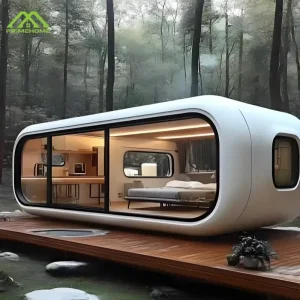 Wholesale Popular online influencer Customized apple capsule house Movable luxury and stylish prefabricated apple cabin Manufacturer, Factory
 -
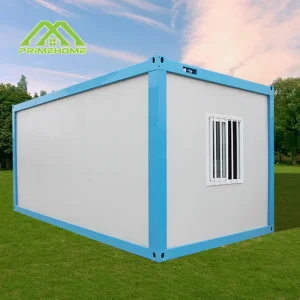 Custom Customized Modular Prefabricated Container Houses & Quick-assembly Container Houses Manufacturers, Factories
 -
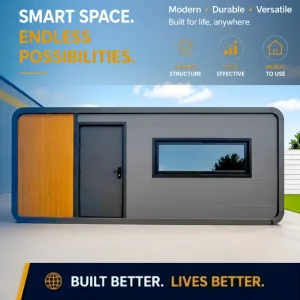 Custom 20FT Modular Apple Capsule Building Custom Prefab Apple Cabin for Glamping Tourist Accommodation Manufacturers, Factories
 -
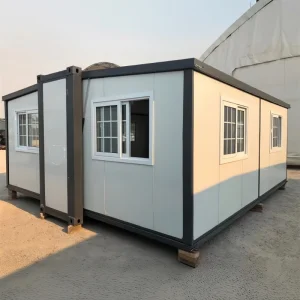 Wholesale Quick Install Prefabricated Tiny House F700 Expandable Container House Modern Glamping Cabin for Scenic Resort and Homestay Manufacturers, Suppliers
 -
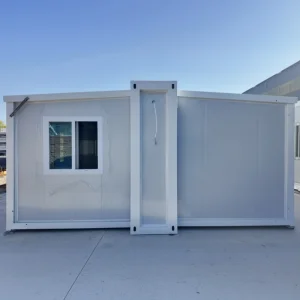 China F700 9M Extended Expandable Container House White Exterior 2-Bedroom Side Entry Prefab Home Factory, Factories
 -
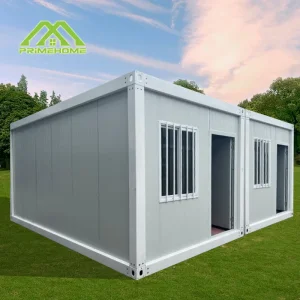 Wholesale 20foot portable prefabricated flat pack house with high-density steel frame Suitable for homes offices and apartments Factory, Factories
 -
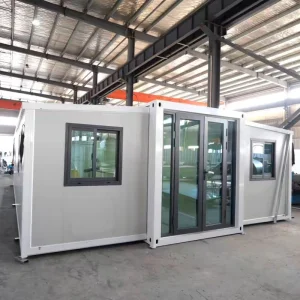 Wholesale 30FT White Expandable Container House 56㎡ Prefab Modular Living Space with Two Bedrooms Kitchen and Bathroom Manufacturer, Factories
 -
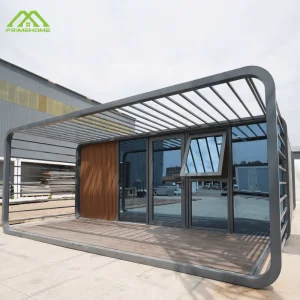 High-Quality High Quality EU Standard Prefab Apple Cabin with Galvanized Steel Frame Removable Low Cost Custom Container House Suppliers, Factory