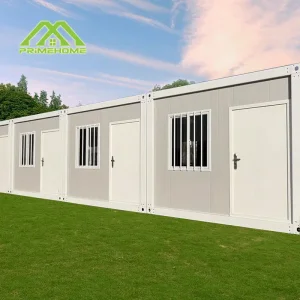
Featured Prefab Sanitation & Modular Housing Solutions
Select from our standard engineering modules or request customized configurations tailored to project-specific environmental, mechanical, and architectural standards.
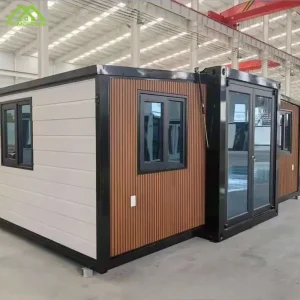
Wholesale 3-bedroom luxury prefab extension house Micro portable and foldable Cost-effective Manufacturers, Supplier
View Product Details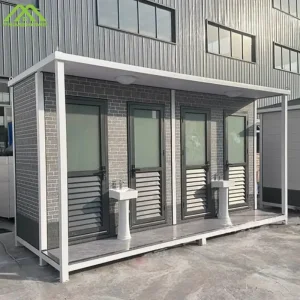
Wholesale Durable and clean Prefabricated mobile container toilets Source factory Good price Manufacturers, Factory
View Product Details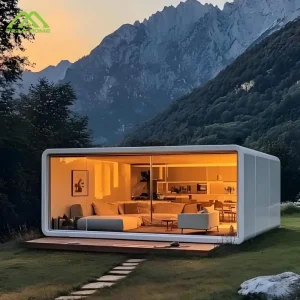
Custom 40-foot prefabricated modular Airbnb Apple Cabin from a Chinese factory Suitable for hotel living rooms and home use Factory, Factories
View Product Details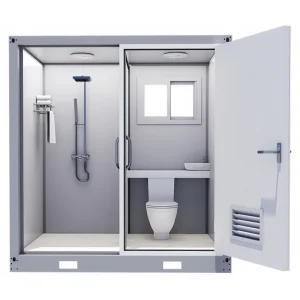
High-Quality Factory Pre-finished Customized Prefab Restroom With Shower Indoor Glass Wall Bathroom Manufacturer, Factory
View Product Details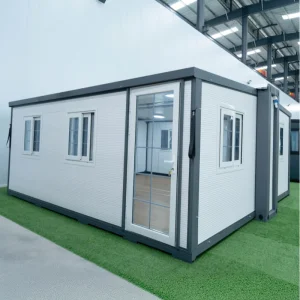
Custom F700 Expandable Container House White Exterior Prefab Cabin with Left‑Side Glass Entry Door Suppliers, Factories
View Product Details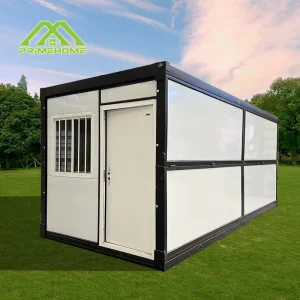
High-Quality 20ft Z-folding foldable container house Folding modular homes Rapid installation High quality Manufacturer, Supplier
View Product Details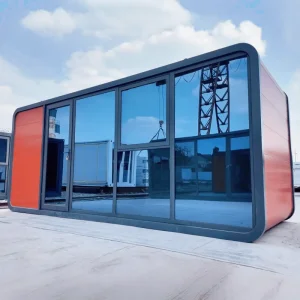
Wholesale Ready to Ship 20ft 40ft Modern Apple Cabin Luxury Glamping Capsule House with One-Piece Shipment and Fast Lead Time Manufacturers, Suppliers
View Product Details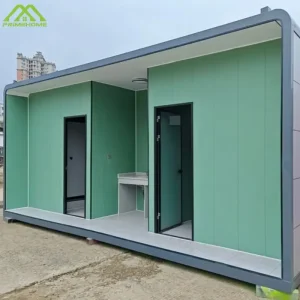
Custom Prefabricated restroom unit Portable toilet Prefabricated bathroom unit Factory, Factories
View Product Details1. Comprehensive Overview of Temporary Toilet & Site Sanitation Engineering
Modern civil infrastructure, mega-mining operations, disaster response efforts, and large-scale public events demand sophisticated sanitation infrastructure that goes far beyond basic chemical portable stalls. As global environmental standards tighten (such as ISO 14001 compliance, LEED site sanitation points, and strict local municipal discharge regulations), enterprise buyers require custom temporary toilet construction engineered for structural longevity, rapid field assembly, and absolute hygienic isolation.
Leading Chinese manufacturing hubs have spearheaded this evolution by combining advanced cold-formed thin-walled steel framing, automated polyurethane (PU) structural insulation sandwich panels, and pre-plumbed MEP (Mechanical, Electrical, and Plumbing) integration. Procurement directors and EPC (Engineering, Procurement, and Construction) contractors can now source factory-finished, fully modularized temporary restroom complexes that reduce on-site installation timelines by up to 80% while lowering life-cycle operational costs.
2. Technical Specifications & Structural Architecture Comparison
Selecting the appropriate structural configuration for temporary toilet construction depends heavily on site climate, duration of deployment, visitor throughput, and logistical accessibility. Below is an engineering comparison matrix detailing the primary structural typologies supplied by Chinese manufacturing partners:
| Sanitation Typology | Structural Frame Specs | Wall & Insulation Core | Plumbing & Waste Architecture | Deployment Velocity | Primary Industrial Application |
|---|---|---|---|---|---|
| Flat-Pack Modular Toilet Blocks | Hot-dip galvanized Q235B steel frame (2.5mm - 3.0mm thickness) | 50mm-75mm Rockwool / PU sandwich panel (B1 Fire Rated) | PEX/PPR piping, concealed wall drainage, connection to local sewer/septic | 4 workers / 4 hours per unit | Mining camps, multi-year civil works, remote construction headquarters |
| Integrated Container Toilet Units | Corten steel ISO shipping container conversion or welded frame | Polyurethane spray foam insulation + Fiber Cement Board (CFC) cladding | Vacuum flush system (80% water reduction) or heavy-duty gravity flow | Plug-and-play (Immediate placement) | High-density public events, urban transit hubs, emergency relief |
| Expandable / Foldable Restroom Modules | Hinged galvanized steel skeleton with hydraulic/manual expansion | EPS/PU insulated composite wall panels with anti-bacterial coating | Pre-installed folding plumbing lines with flexible quick-connect couplers | 2 workers / 15 minutes per unit | Disaster response, rapid military staging, mobile medical units |
| Off-Grid Smart Vacuum Cabins | Light gauge steel (LGS) chassis with aluminum outer shell | High-density PIR thermal barrier panels + double-glazed low-E glass | Closed-loop bio-digester tank, solar PV array, UV-C water recycling | Fully autonomous off-grid operation | Eco-resorts, national parks, remote tourist attraction sites |
Corrosion & Waterproof Engineering
Temporary toilet facilities are subjected to aggressive internal moisture and chemical cleaning agents. Leading suppliers utilize hot-dip galvanization (min 120g/m² zinc coating) combined with fluorocarbon anti-corrosion paint. Floors feature 18mm MGO or fiber-cement boards overlaid with seamless 2.0mm aluminum checker plate or anti-slip vinyl with full perimeter coving.
Sanitary Fixtures & MEP Compliance
Global procurement requires strict adherence to regional plumbing certifications (e.g., UPC for North America, WaterMark for Australia, CE for Europe). Facilities are pre-fitted with ceramic or 304/316 stainless steel vandal-proof fixtures, automated infrared sensors, low-flow dual flush valves, and explosion-proof moisture-sealed electrical wiring.
Thermal & Odor Control Engineering
Continuous ventilation design incorporates positive-pressure HVAC units, micro-perforated ceiling louvers, and inline axial exhaust fans operating at 15-20 air changes per hour (ACH). High-R-value PU insulation guarantees operational functionality across extreme ambient temperatures ranging from -30°C to +55°C.
3. Strategic Advantages of Partnering with Chinese Custom Manufacturers
China has consolidated its position as the world's primary manufacturing engine for prefabricated modular housing and temporary sanitation facilities. Strategic procurement from Chinese source factories offers key structural and financial advantages for global EPC contractors and distributors:
1. Complete Industrial Supply Chain Integration
Industrial clusters in Jiangsu (Suzhou), Guangdong, and Shandong provide immediate access to raw steel mills, specialized sanitary hardware manufacturers, and automated panel production facilities. This dense supply chain network eliminates component procurement delays and reduces bill-of-materials (BOM) costs by 30-45% compared to Western counterparts.
2. Advanced Robotic Automation & Scale
Top-tier Chinese factories operate automated laser cutting systems, robotic frame welding lines, and continuous PU sandwich panel laminators. Factory outputs exceeding 5,000 modular units per month guarantee rapid fulfillment of massive enterprise orders for national infrastructure projects.
3. High OEM/ODM Customization Capability
Unlike rigid off-the-shelf distributors, Chinese manufacturers provide extensive custom engineering. From specialized ADA-compliant accessible layouts and integrated shower/laundry combinations to custom facade treatments (such as wood-plastic composite cladding or architectural metal skin), engineering teams modify CAD/BIM models to match precise project tenders.
4. Global Trends Transforming Temporary Toilet Construction (2025–2030)
The commercial temporary toilet construction industry is being reshaped by technological innovation, environmental mandates, and digital asset tracking. Understanding these macros trends allows procurement managers to future-proof their capital asset purchases:
Smart IoT Telemetry & Hygiene Analytics
Next-generation temporary restrooms incorporate IoT sensor suites connected to cloud-based facility management dashboards. Optical sensors monitor occupancy count, ultrasonic sensors track freshwater/waste tank levels in real time, and automated gas detectors monitor ammonia ($NH_3$) and hydrogen sulfide ($H_2S$) concentrations to trigger automated ventilation cycles or alert maintenance crews.
Vacuum Sanitation & Micro-Bioreactor STP
Driven by water conservation mandates, modern temporary toilet modules are adopting vacuum drainage technology similar to commercial aircraft. Using only 0.5 to 0.8 liters of water per flush (compared to 6 liters for conventional gravity toilets), these systems reduce sewage volume by over 85%. On-site membrane bioreactors (MBR) purify greywater to non-potable flushing standards.
Circular Economy & Demountable Zero-Waste Design
ESG-focused corporate buyers require temporary facilities built under circular economy principles. Steel framing components are 100% recyclable, while composite panel wall systems utilize non-toxic, zero-VOC materials. Modular designs allow facilities to be assembled, dismantled, and redeployed up to 15 times over a 15-to-20-year operational life cycle without structural degradation.
5. Global Enterprise Sourcing & Compliance Specification Guide
Cross-border procurement of modular construction assets requires strict compliance verification during the pre-production phase. Buyers must enforce the following technical and quality assurance checklists with Chinese manufacturers:
Phase 1: Engineering & Building Code Alignment
- Structural Calculations: Verification of wind load ratings (up to 120 km/h or Typhoon Class 12) and seismic load tolerance (Zone 8 resistance).
- Accessibility Standards: Engineering review for ADA (Americans with Disabilities Act) or UK Part M compliance, including ramp inclines, grab bar load capacities, and turning radiuses.
- Electrical Certifications: Dual-voltage wiring (110V/220V), UL/CE certified breaker boxes, and IP65 waterproof rated lighting fixtures.
Phase 2: Factory Acceptance Testing (FAT)
- Hydrostatic Water Testing: 24-hour pressure leak testing of all internal plumbing conduits and sloped floor drain membranes prior to wall enclosure.
- Mill Test Certificates (MTC): Verification of steel grade (Q235B/Q355B) and zinc coating thickness gauges for anti-corrosion compliance.
- Pre-Shipment Trial Assembly: 100% dry-dock assembly of 10% of total batch units to confirm panel alignment, corner casting tolerances, and hardware fitment.
Phase 3: Logistics & Customs Optimization
- Container Cube Utilization: CAD-optimized packing diagrams ensuring maximum volumetric efficiency inside ocean containers.
- Export Documentation: Comprehensive HS Code categorization (HS 94069000 for prefabricated buildings), Certificate of Origin (Form E/Form F), and fumigation compliance for solid timber packaging.
- Spare Parts & Maintenance Packs: Inclusion of 5% extra sealants, hardware spares, specialized plumbing valves, and replacement panel skins.
6. Localized Application Scenarios & Sector Solutions
Custom temporary toilet construction modules are deployed across diverse operating environments worldwide. Manufacturing designs are tailored specifically to meet distinct sectoral operational profiles:
Mega Civil & Mining Camps
Heavy-duty, high-capacity multi-stall container units built with stainless steel urinals, vandal-proof fixtures, integrated hot-water shower stalls, and heavy industrial floor plates. Designed for 24/7 continuous worker throughput in harsh remote climates.
Humanitarian & Emergency Response
Rapidly deployable foldable or flat-pack sanitation units shipped via air cargo or emergency relief convoys. Fast assembly within 15 minutes provides immediate cholera and disease prevention in post-disaster zones.
Municipal Transit & Parks
Aesthetic, anti-graffiti external cladding (e.g., carved metallic insulation board or timber texture panels) paired with automated pay-to-use access control gates, touchless self-cleaning fixtures, and baby-changing stations.
Luxury Eco-Tourism & Events
High-end "Apple Cabin" or capsule-style VIP restrooms featuring marble-textured interior PVC walls, LED ambient vanity mirrors, climate-controlled HVAC, soundproof insulation, and integrated audio systems.
7. End-to-End Macro Solutions: From Architectural Drafting to Site Commissioning
Experienced custom manufacturers offer complete EPC (Engineering, Procurement, Construction) turnkey project execution, eliminating friction between architectural design and site utility connection:
1. Site & Hydraulic Engineering
Geotechnical foundation load design, water inlet pressure modeling, and waste discharge sizing tailored to site soil conditions and user volume projections.
2. BIM / CAD Customization
Full 3D digital twin creation in Revit/AutoCAD, allowing client architects to review interior spatial clearance, MEP routing, and structural collision checks.
3. Controlled Factory Production
Precision indoor assembly under ISO 9001 certified conditions. 100% pre-piping and electrical wiring eliminated field labor errors and delays.
4. Site Installation Guidance
Dispatch of factory technical engineers for on-site crew training or provision of detailed step-by-step 3D video manuals and remote video-conferencing support.
8. Frequently Asked Questions (FAQ) — B2B Procurement & Technical Specs
Below are direct engineering and logistical answers to common technical queries raised by global buyers and project managers:
Explore Additional Modular Housing & Sanitation Models
Browse our extended lineup of expandable villas, space capsule cabins, flat-pack worker quarters, and specialized mobile sanitation blocks.
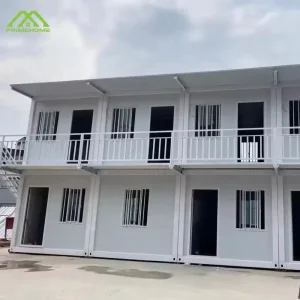
Wholesale Solve housing issues and relocate quickly—we recommend mobile prefabricated container house for move-in ready living Suppliers, Factories
View Product Details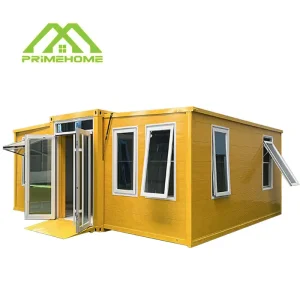
China Sliding and folding expansion house Efficient and economical modular Double wings Customizable Manufacturer, Factories
View Product Details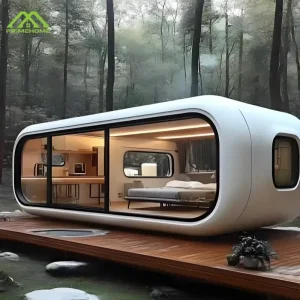
Wholesale Popular online influencer Customized apple capsule house Movable luxury and stylish prefabricated apple cabin Manufacturer, Factory
View Product Details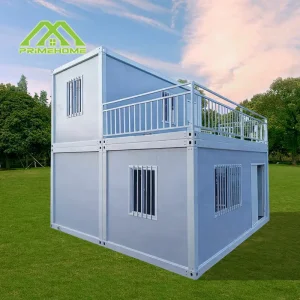
High-Quality Affordable prefabricated mini houses Demountable flat pack container housing Rapid deployment Supplier, Suppliers
View Product Details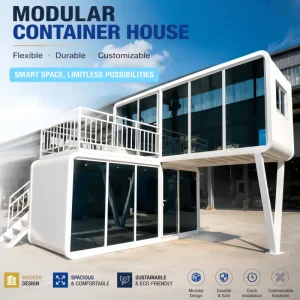
High-Quality 20FT Prefab House Double Deck White Apple Cabin for New Trend Modular Tourism Accommodation Manufacturer, Factories
View Product Details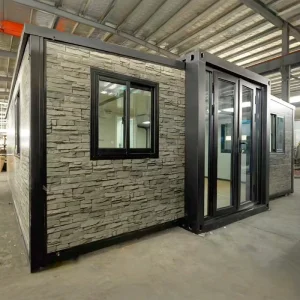
Wholesale 20FT Expandable Container House Prefab Villa with Unique Stone Pattern Exterior Panels for Accessory Dwelling Unit Manufacturers, Suppliers
View Product Details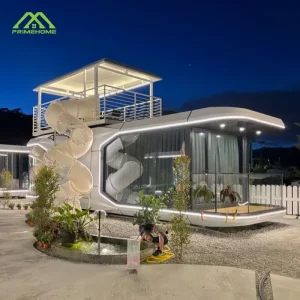
Custom Industrialized intelligent and luxury space capsule Plug-and-play China's best-selling prefabricated capsule house Manufacturer, Factories
View Product Details