
High-Capacity Portable & Modular Toilet Solutions for Sydney
Direct factory-engineered prefabricated restroom units built for high-footfall Australian operational requirements.
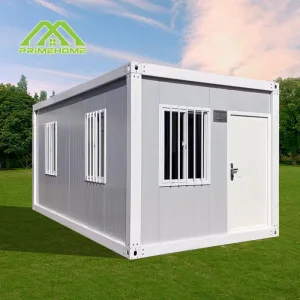
Luxury Rapid Expandable Modular Container Washroom Suite for Sydney Commercial Sites
View Specifications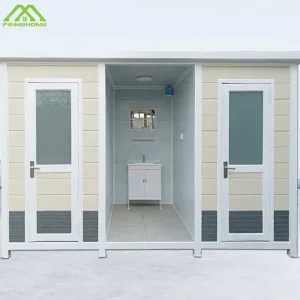
High-Quality Factory Direct Sales Portable Mobile Container Toilet Single/Double Suite for Sydney
View Specifications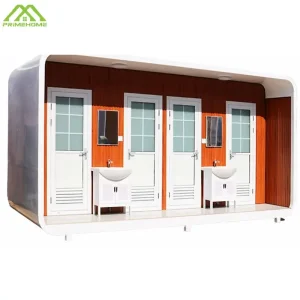
Customized Heavy-Duty Sandwich Panel Container Restroom Modules for Public & Private Sydney Events
View Specifications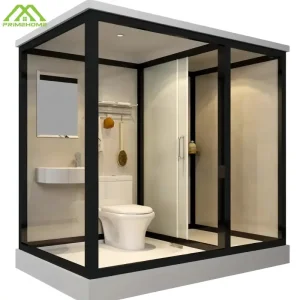
Custom 20-Foot Minimalist Modular Container Bathroom Block for Outdoor Sydney Venues
View SpecificationsExecutive Summary: The Modernization of Sydney’s On-Site Sanitation Infrastructure
The Greater Sydney metropolitan area is experiencing an unprecedented convergence of civil infrastructure expansion, rapid urban density updates, and stringently monitored environmental guidelines. Projects ranging from the Western Sydney Airport Aerotropolis to extensive transport expansions under Transport for NSW require resilient, hygienic, and scalable site utilities. Traditional chemical toilets and temporary plastic enclosures no longer satisfy modern Australian workplace safety (WHS), structural durability, and environmental compliance benchmarks.
As offsite construction and modular engineering become standard practice across New South Wales (NSW), the demand for high-performance custom container toilets and prefabricated bathroom units has surged. Sourced from advanced manufacturing hubs and engineered to comply with Australian Plumbing Standards (AS/NZS 3500) and Electrical Codes (AS/NZS 3000), modular WC blocks provide a permanent-grade experience with temporary-deployment agility.
Sydney Commercial & Industrial Sanitation Reality: Structural & Regulatory Demands
Deploying site infrastructure in Sydney presents unique micro-climatic and logistical challenges that off-the-shelf portable restrooms fail to address:
Coastal Anti-Corrosion Needs
Sydney’s coastal environment requires marine-grade structural steel coatings (C4/C5 rating) to resist salt-air degradation across Botany Bay, Barangaroo, and coastal development corridors.
NSW EPA Compliance
Strict discharge rules demand leak-proof blackwater and graywater management systems, backflow prevention, and integration with local Sydney Water mains or closed-loop holding tanks.
Rapid Plug-and-Play Mobility
High local labor costs make long site-assembly times prohibitive. Pre-plumbed, pre-wired container restrooms reduce field installation to hours rather than weeks.
Global Trends Shaping Offsite Container Sanitation
From smart IoT monitoring to sustainable wastewater treatment, container toilets have evolved into high-tech modular assets.
The global portable sanitation sector is moving away from disposable plastic units toward heavy-duty, ISO-container derived infrastructure. Driven by ESG (Environmental, Social, and Governance) targets, commercial developers and municipal councils prioritize longevity, thermal efficiency, and water conservation.
Smart Water & Waste Monitoring
Integrated telemetry monitors tank levels, flow rates, and power consumption in real time, alerting maintenance teams in Sydney before overflows or supply shortages occur.
High-Efficiency Vacuum & Low-Flow Systems
Advanced vacuum flushing cuts water usage by up to 80% per cycle, dramatically reducing pump-out frequencies and operating expenses for remote NSW job sites.
Off-Grid Solar Integration
Roof-mounted solar arrays coupled with lithium battery banks supply continuous power for LED lighting, mechanical ventilation, and automatic hand-wash sensors.
China Factory 4.0: Modern Supply Chain Resilience & Cost Advantages
To balance the strict quality thresholds of Australian standards with procurement budget constraints, Tier-1 Australian contractors partner directly with advanced Chinese manufacturing facilities. Utilizing fully automated Industry 4.0 production environments, specialized container factories deliver unmatched build quality, structural precision, and cost efficiencies.
Robotic Frame Welding & Painting
Automated robotic arms execute continuous welds along heavy-gauge steel corner fittings and base frames, eliminating structural human error and ensuring uniform structural strength.
Sandwich Panel Engineering
Automated continuous lamination lines produce polyurethane (PU) and rockwool sandwich wall panels with fire ratings, high acoustic insulation, and thermal resistance tailored for Australian heat.
Certified Quality Control
Every unit undergoes pressure testing for plumbing circuits, dielectric testing for electrical harnesses, and water-tightness flooding tests prior to container loading.
By leveraging integrated industrial clusters in China's manufacturing regions, raw material sourcing, fit-out assembly, and shipping logistics happen under one roof. This yields up to a 40-50% cost advantage over locally built Australian timber or light-steel framing, without compromising structural integrity or interior luxury.
Sydney & NSW Localized Application Scenarios
Custom container restrooms adapted for diverse site constraints, foot-traffic demands, and architectural contexts across NSW.
Civil Infrastructure & Worksites
Heavy-duty, forklift-rated container blocks designed for continuous use across Sydney Metro rail extensions, roadworks, and high-rise construction zones requiring WHS-approved facilities.
Major Outdoor Events & Festivals
Luxury VIP bathroom trailers and container modules equipped with air conditioning, touchless sensors, full-length mirrors, and ambient lighting for outdoor gatherings in Centennial Park or Sydney Harbour.
National Parks & Coastal Reserves
Self-contained, environmentally neutral off-grid toilet units featuring solar power and composting or blackwater storage, ideal for sensitive ecological regions along the NSW coastline.
Technical Specification & Compliance Benchmark Matrix
Compare baseline commercial container toilets against our Sydney-optimized custom factory standards.
| Engineering Parameter | Standard Market Container Unit | Sydney Custom Factory Benchmark |
|---|---|---|
| 1.8mm - 2.2mm Cold-Rolled Light Steel | 3.0mm - 4.0mm Hot-Dip Galvanized Structural Steel | |
| Single coat alkyd primer and paint | C4 Marine-Grade Zinc-Rich Epoxy + Polyurethane Topcoat | |
| Generic domestic fittings | AS/NZS 3500 Compliant (WaterMark Certified Fittings) | |
| Basic non-certified harness | AS/NZS 3000 Standard (RCD Protected, IP65 Waterproof) | |
| 50mm EPS Foam | 75mm - 100mm High-Density PU or Non-Combustible Rockwool | |
| Plywood with standard PVC mat | 18mm Fiber Cement Board + Seamless Aluminum Checker Plate / Epoxy | |
| Region A / Up to 110 km/h | Region B/C Wind Load (AS 1170.2) / Up to 180 km/h |
Complete Modular Sanitation Range for Export to Sydney
Explore specialized single, double, and multi-cubicle container washroom configurations available directly from our manufacturing facility.
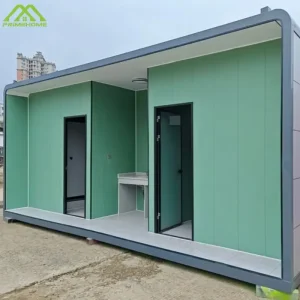
Custom Prefabricated Commercial Restroom Unit & Portable Toilet Block for Sydney Operations
View Specifications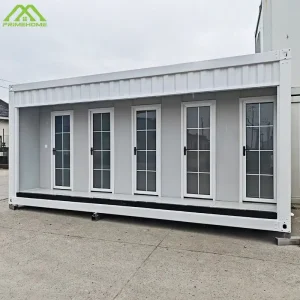
Customized High-Quality Portable Bathroom & Shower Containers for Sydney Worksite Camps
View Specifications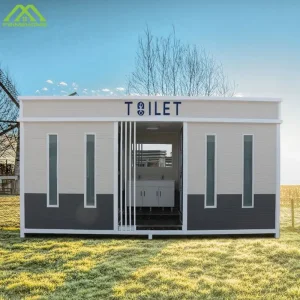
Luxurious Prefabricated Container Toilet with Modern Sandwich Wall Design for Sydney Venues
View Specifications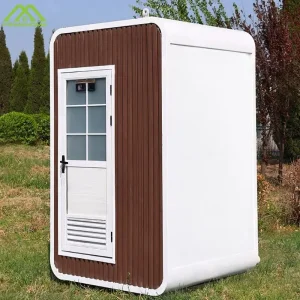
Single or Double Modular Container Toilet Unit for Prefabricated Sydney Public Restrooms
View Specifications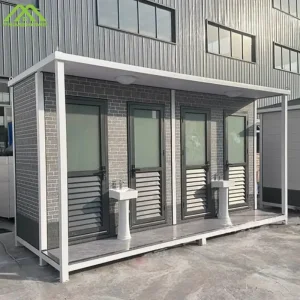
Durable & Easy-Clean Prefabricated Mobile Container Toilet Blocks at Factory Direct Pricing
View Specifications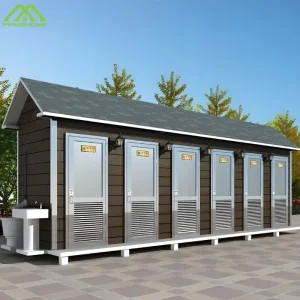
High-Quality Luxury Outdoor Bathroom WC Container Toilet Suite serving Greater Sydney
View Specifications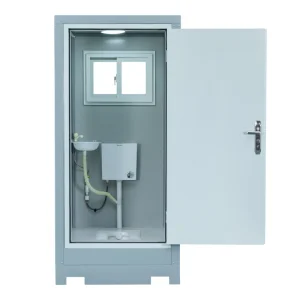
Prefab Mobile Outdoor Single-Unit Toilet for Sydney Construction & Event Sites
View Specifications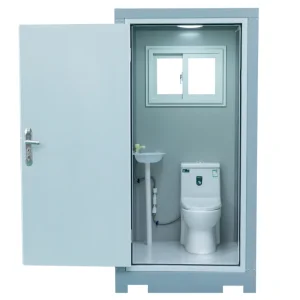
Outdoor Public Restroom Prefabricated Modular Toilet for Sydney Camping & Scenic Parks
View SpecificationsEnterprise Procurement Strategy: Total Cost of Ownership (TCO) Analysis
When evaluating sanitation infrastructure for projects in Sydney, experienced procurement directors look beyond the initial purchase order. The Total Cost of Ownership (TCO) over a 5 to 15-year operational lifecycle includes site deployment labor, maintenance frequency, shipping volume optimization, and asset resale or redeployment value.
Freight Density Optimization
Our flat-pack container toilet modules ship with up to 4 complete units nested inside a single 40ft High Cube (40HQ) shipping container. This slashes international ocean freight costs per unit by over 60% compared to fully assembled boxes.
Low Maintenance & High Durability
Fiberglass or fiber-cement interior cladding combined with integrated floor drains enables rapid high-pressure washdowns. Non-porous surfaces prevent bacteria accumulation and lingering odors, lowering servicing labor costs.
High Redeployment Value
Unlike fragile plastic porta-potties that degrade under Sydney's intense UV rays, rigid ISO container frames allow units to be re-lifted, relocated, and reused across multiple sequential construction sites over a 15+ year operational span.
Frequently Asked Questions (FAQ)
Addressing critical procurement, compliance, and engineering queries for Sydney buyers.
How do custom container toilets comply with Australian Plumbing Standards (AS/NZS 3500)?
Our direct factory manufacturing lines utilize WaterMark certified plumbing fixtures, copper or PEX-a water supply lines, and heavy-duty DWV (Drain, Waste, Vent) PVC piping configured precisely to match Australian backflow prevention and waste pipe sizing specifications prior to export.
Can container restrooms be deployed on remote Sydney sites without mains power or sewer?
Yes. Units can be customized with integrated blackwater holding tanks (ranging from 1,000L to 5,000L), fresh water storage chambers, pressure pump stations, and roof-mounted off-grid solar power systems with battery storage for total self-sufficiency.
What is the typical shipping lead time from your factory to Port Botany, Sydney?
Following final design drawing sign-off, factory production typically takes 15 to 25 days depending on total order volume and custom options. Ocean transit from major Chinese manufacturing ports (such as Shanghai or Ningbo) to Port Botany, Sydney typically averages 12 to 16 days.
How does the factory protect steel frames against Sydney’s coastal salt spray?
Structural steel components undergo shot-blasting followed by hot-dip galvanization. We apply a multi-layer protective coating consisting of an epoxy zinc-rich primer, an epoxy intermediate coat, and a polyurethane topcoat formulated to meet C4/C5 marine atmospheric corrosion standards.
Can units be customized for DDA (Disability Discrimination Act) compliance in Australia?
Absolutely. We manufacture fully compliant accessible modular restroom blocks featuring wide outward-opening doors, flat threshold entry ramps, stainless steel grab rails, compliant basin heights, and emergency call button wiring to meet Australian access requirements.