
High-Priority Modular Folding Systems for West African Projects
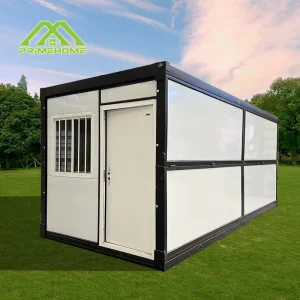
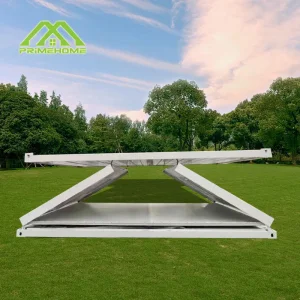
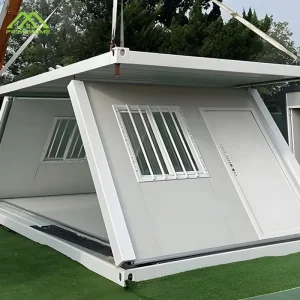
Factory-direct prefabricated units engineered specifically for high transport efficiency, fast assembly in 10 minutes, and extreme resilience against Gulf of Guinea climatic conditions.
Navigating Ghana's Built-Environment Challenges with Modular Steel Innovation
As West Africa accelerates its urbanization, industrial expansion, and resource extraction, conventional wet construction methods face growing structural and financial bottlenecks.
The Ghanaian Infrastructure Gap & Housing Deficit
Ghana’s rapid economic expansion—driven by gold mining in Tarkwa and Obuasi, oil and gas exploration in Takoradi, and burgeoning commercial hubs in Greater Accra and Kumasi—has strained traditional building supply chains. With a national housing deficit exceeding 1.8 million units, public and private sector developers require construction methodologies that bypass cement scarcity, skilled labor shortages, and lengthy construction timelines.
Traditional sand-crete block building in tropical climates suffers from severe micro-cracking due to extreme thermal expansion, prolonged rainy seasons (May to August), and moisture ingress. Custom foldable container houses offer a paradigm shift: manufactured under precision factory conditions in China, shipped with ultra-high density, and erected on-site in Ghana within minutes without requiring heavy foundation pours.
Climatic & Operational Challenges Solved:
- High Salt-Fog Corrosion: Specialized coastal C3/C4 anti-corrosion marine paint systems designed for coastal Accra and Tema port districts.
- Severe Humidity & Solar Heat Gain: High-density Polyurethane (PU) and Rock Wool core sandwich panels reducing internal ambient temperatures by up to 8°C without air conditioning.
- Termite & Pest Resistance: 100% galvanized structural steel sub-frames eliminating timber rot, white-ant destruction, and fungal degradation.
- Flash Flood Resilience: Elevated adjustable steel pier foundations preventing standing water infiltration during torrential downpours.
Structural Kinematics & Material Science Specifications
Our engineering framework integrates cold-formed structural steel profiles, high-performance thermal insulation, and multi-layer weatherproofing joints certified to global structural standards.
| Structural Parameter | Technical Specification / Standard | Ghana Field Application Advantage |
|---|---|---|
| Main Frame Material | Q235B / Q355B Hot-Dip Galvanized Structural Steel (2.5mm - 3.0mm thickness) | Eliminates structural rust in humid climates; supports structural stacking up to 3 levels. |
| Insulation Core Panel | 50mm / 75mm / 100mm PU (Polyurethane) or High-Density Rock Wool (120kg/m³) | Thermal conductivity K ≤ 0.024 W/m·K. Reduces solar cooling loads significantly in tropical heat. |
| Folding Hinge Kinematics | Heavy-Duty Galvanized Steel Hinges with EPDM Double-Lipped Seals | Tested for 10,000+ fold cycles. Prevents water and wind penetration during West African line-storms. |
| Wind Load Rating | Designed to resist wind pressure up to 0.6 kN/m² (Gust speeds up to 120 km/h) | Ensures safety during severe tropical thunderstorms and squall lines across coastal/inland Ghana. |
| Seismic Resistance | Grade 8 Earthquake Load Compliance (ISO 22156 Modular Standard) | Absorbs kinetic shear forces better than brittle masonry structures along the coastal fault line. |
| Roof Load & Drainage | 1.5 kN/m² live roof load capacity with built-in internal downpipe gutters | Prevents water pooling during heavy tropical downpours; supports BIPV solar panel installation. |
| Floor Structure | 18mm Fiber Cement Board + 2.0mm Commercial Waterproof PVC Floor Wrap | Fireproof (Class A), termite-proof, heavy impact resistant, easy to sanitize in medical/mining settings. |
Tailored Application Scenarios Across Ghana's Growth Sectors
From remote gold fields to busy metropolitan retail districts, our modular container houses deliver turnkey agility for diverse commercial and public uses.
Remote Mining & Resource Extraction Camps
Deploy workforce accommodation, offices, and mess halls overnight in mining concessions across Western and Ashanti regions (Tarkwa, Prestea, Obuasi). Pre-wired electrical circuits, ensuite shower facilities, and zero wet-work assembly allow immediate occupancy for engineering personnel.
Urban Commercial & Micro-Retail Hubs
Rapid setup of pop-up retail stores, cellular repair shops, coffee outlets, and fintech branches in high-density corridors of Greater Accra (Osu, Spintex, East Legon) and Kumasi. Fully lockable, secure steel structures that can be relocated easily when lease terms shift.
Emergency Healthcare & Disaster Relief Shelters
Sanitary, rapidly deployable mobile medical clinics, triage centers, and field hospital wards during public health emergencies or seasonal flood responses. Washable anti-bacterial interior finishes and integrated HVAC ducting ensure clinical-grade environment control.
Affordable Public & Institutional Housing
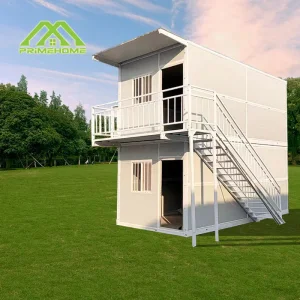
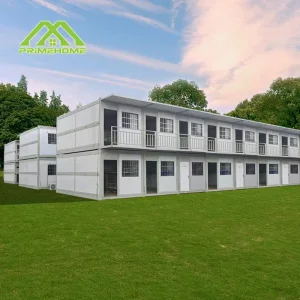
Scalable, modular housing clusters supporting government urban renewal initiatives and GREDA-sponsored developments. Units can be combined side-by-side or stacked two-high with external steel staircases and shaded balconies to maximize land utilization.
Global Prefabrication Trends vs. Traditional West African Construction
Comparative matrix highlighting financial, operational, and environmental metrics of modular steel folding units against site-cast concrete masonry.
| Evaluation Parameter | Traditional Concrete Block Building | Custom Foldable Container House System |
|---|---|---|
| Speed of Execution | 6 to 12 months per 100m² structure | Under 1 hour per 100m² structure (unfolding + fixing) |
| Transport Freight Cost | High local transport fees for bulk gravel, sand, and cement bags | Ultra-dense packaging: Up to 12 folded units in one 40ft HQ container |
| On-Site Waste & Water Use | Significant water consumption, mortar waste, and environmental site disruption | Zero site water required; zero dust or structural waste on site |
| Relocatability & Asset Value | 100% fixed asset; destroyed upon demolition or land lease expiration | 100% mobile; fold, load onto flatbed truck, and redeploy anywhere |
| Total Cost Predictability | Subject to local material price spikes, theft, and labor delays | Fixed factory pricing; turnkey cost control from order to delivery |
Streamlined Import, Customs Clearance & Local Site Prep in Ghana
We provide end-to-end guidance to ensure seamless delivery through Tema and Takoradi ports, complete compliance with local building codes, and effortless on-site assembly.
Port Handling & Customs
Our shipping documentation package includes HS Code classification (8905.90 / 9406.90 for prefabricated steel structures), Packing Lists, Commercial Invoices, and Certificate of Origin to facilitate swift clearance at Port of Tema or Takoradi under GSA (Ghana Standards Authority) regulations.
Inland Transport Logistics
Folded units measure just 350mm to 450mm in height when collapsed. Standard flatbed trucks can carry up to 6 units per inland trip to interior destinations such as Kumasi, Sunyani, Tamale, or remote mining locations, drastically lowering freight cost per module.
Site Foundation & Setup
Foldable containers require minimal ground preparation. Simple concrete block piers, compacted gravel beds, or adjustable steel Jack-Legs are sufficient. Unfolding requires only a crane/hiab truck, 2 operators, and 10 minutes to pull up roof profiles and lock side bolts.
Technological Innovations Shaping Tomorrow’s Off-Grid Housing
Our R&D division continuously upgrades structural design, energy integration, and smart home technology tailored for the African continent.
Off-Grid BIPV Solar Roof Integration
Integrating flexible, lightweight monocrystalline solar laminates directly into the foldable roof profile. Paired with lithium iron phosphate (LiFePO4) energy storage systems, this allows units deployed in remote areas of Ghana to operate 100% independent of ECG grid infrastructure.
Hydrophobic Passive Cooling Exterior Skins
Incorporating nano-ceramic radiative cooling paint coatings that reflect up to 95% of incoming solar infrared radiation. This innovative surface treatment dramatically suppresses heat transfer through metal skins, reducing internal temperatures by up to 10°C under direct midday sunlight.
Comprehensive Prefabricated Modular Catalog for Suppliers & Developers
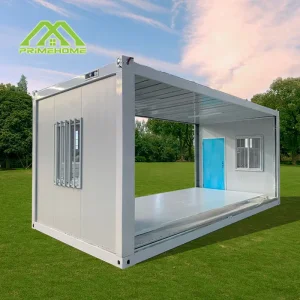
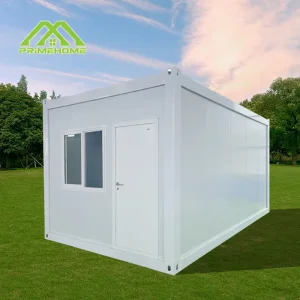
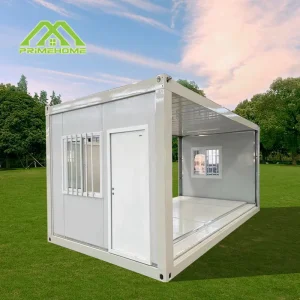
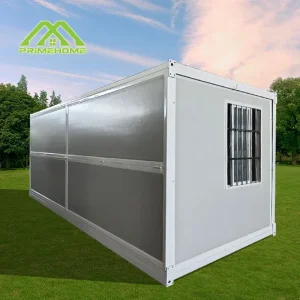
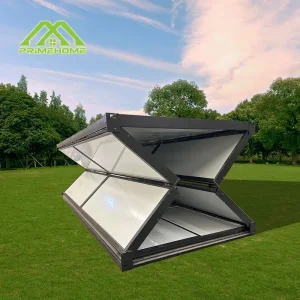
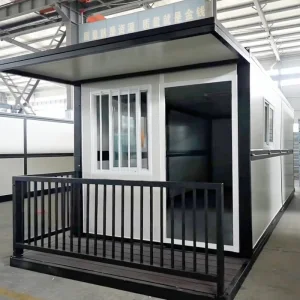
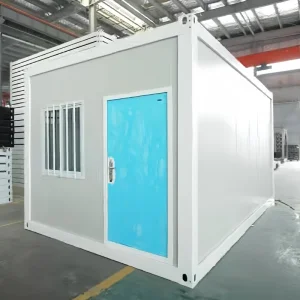
Explore our complete range of customizable foldable container houses, temporary offices, dormitory cabins, and special event rest units available for direct factory shipment to Ghana.
Frequently Asked Questions: Purchasing & Deploying Container Houses in Ghana
Detailed answers covering shipping logistics, custom engineering, structural longevity, and local regulatory considerations for Ghanaian clients.
Ready to Scale Your Infrastructure Project in Ghana with Turnkey Prefabrication?
Contact our Senior Engineering and Procurement Directors today for factory-direct quotes, CAD floorplan customizations, and logistics quotes to Tema or Takoradi.