
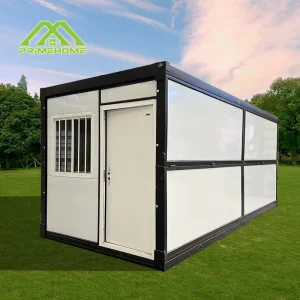
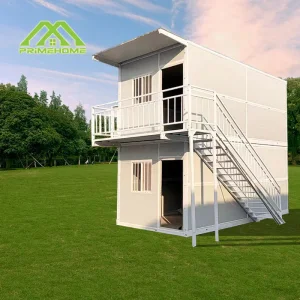
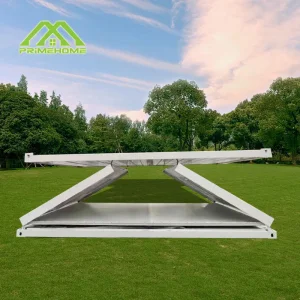
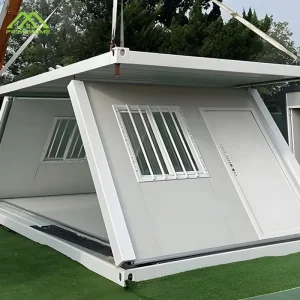
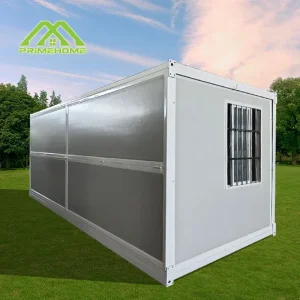
Featured Rapid-Deployment Models for Omani Sites
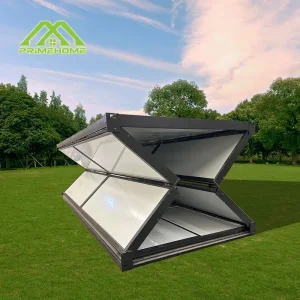
Pre-engineered Z & X folding structural units optimized for extreme Arabian Gulf environments, high thermal insulation, and rapid crane assembly.
Executive Summary: Oman’s Macro Infrastructure & Modular Shift
Analyzing the transition from traditional masonry construction to advanced factory-built modular structures across Oman’s industrial zones and mega-development projects.
Oman Vision 2040 Demand Catalyst
The Sultanate of Oman is undergoing unprecedented industrial expansion under Oman Vision 2040. Key mega-developments—including the Special Economic Zone at Duqm (SEZAD), Khazaen Economic City, the expansion of the Sohar Port & Freezone, and green hydrogen hubs in Salalah—require tens of thousands of rapidly deployable, thermally resilient, and highly transportable structures. Conventional brick-and-mortar construction fails to meet the tight project schedules and mobile workforce demands of these remote, high-heat territories.
As a result, major EPC contractors (Engineering, Procurement, Construction), oil field operations (such as PDO project zones), and commercial developers are turning to direct factory procurement of Chinese-manufactured foldable container houses. These units provide factory-controlled precision, structural safety, and immediate plug-and-play operation.
Climatic Challenges of the Arabian Peninsula
Deploying temporary or semi-permanent housing in Oman requires overcoming severe physical environmental constraints:
- Extreme Ambient Heat: Summer temperatures routinely exceed 50°C in interior desert sectors (e.g., Fahud, Rub' al Khali perimeter).
- High Relative Humidity & Salinity: Coastal zones like Muscat, Sohar, and Sur face intense airborne salt fog and humidity, causing aggressive galvanic corrosion on standard steel profiles.
- Severe Dust & Sandstorms: High-velocity windstorms carry micro-abrasive silica, demanding airtight, pressure-sealed structural hinges and UV-stable exterior coatings.
Key Strategic Takeaway for B2B Importers: Procuring foldable container houses for Oman requires strict engineering compliance. Units must feature heavy-gauge hot-dip galvanized steel framing (minimum 2.5mm–3.0mm thickness), high-density Polyurethane (PU) or Rock Wool sandwich core insulation, and marine-grade anti-corrosion paint systems to ensure a 20+ year design life under GCC desert conditions.
Oman Market Engineering Metrics & Efficiency Benchmarks
Quantitative comparisons evaluating factory-fabricated foldable container units against conventional modular flat-pack and masonry builds in Oman logistics.
Technical Performance Matrix: Foldable vs. Traditional Systems
This empirical dataset highlights why tier-1 main contractors in Muscat, Salalah, and Duqm are rapidly phasing out temporary site-built wooden shacks and heavy concrete blocks in favor of pre-wired Z-folding steel dwellings.
| Performance Parameter | Z-Foldable Container Unit (PrimeHome) | Standard Flat-Pack Container | Conventional Masonry / CMU |
|---|---|---|---|
| Deploy Speed (10 Units) | 4 Hours (2 Workers + Crane) | 3 to 4 Days (4 Workers) | 6 to 8 Weeks |
| 40HQ Container Shipping Yield | 10 to 12 Folded Modules | 4 to 6 Flat-Pack Bundles | N/A (Raw Materials Shipped) |
| Thermal Conductivity (U-Value) | 0.28 W/m²K (50mm PIR Core) | 0.45 W/m²K (EPS Core) | 1.30 W/m²K (Uninsulated Block) |
| Structural Fire Rating | Class A Non-Combustible (Rockwool/PIR) | Class B1 / B2 | Class A Non-Combustible |
| Relocation Flexibility | 100% Re-foldable & Movable (50+ Cycles) | Partial (Disassembly damages frames) | 0% (Permanent Demolition) |
| HVAC Energy Load | Reduced by up to 45% | Standard Load | High Solar Heat Transmission |
Technical Breakdown: Built for GCC Structural Rigor
In-depth architectural anatomy, metallurgy, sealing technology, and electrical engineering required for seamless deployment in Gulf Cooperation Council territories.
Metallurgy & Structural Framework
The backbone of our foldable container system is an automated cold-rolled Q235B/Q355B galvanized structural steel chassis. Top and bottom frame headers utilize 2.5mm to 3.0mm profiles engineered to withstand wind loads up to 120 km/h (compliant with regional GCC wind shear parameters). The steel structure undergoes a multi-stage surface treatment: shot blasting to SA 2.5 standard, followed by an epoxy zinc-rich primer and a durable polyurethane topcoat (total DFT > 120μm) for resistance against coastal saltwater spray in Muscat and Sohar.
Thermal Envelope & Insulation Core
To combat ambient desert heat, wall panels are constructed using 50mm, 75mm, or 100mm Polyisocyanurate (PIR) or high-density Rock Wool (120kg/m³) core sandwich panels. Steel skins feature 0.4mm–0.5mm pre-painted galvanized steel (PPGI) with high Solar Reflectance Index (SRI) white/off-white finishes. This engineered envelope prevents thermal bridging, drastically reduces solar heat gain, and allows air conditioning units to maintain internal temperatures of 22°C with minimal power draw.
Waterproofing & Hinge Integrity
The vulnerability of standard folding structures lies in the hinges. Our second-generation design utilizes continuous heavy-duty stainless steel folding hinges coupled with dual-layer EPDM rubber weatherstripping. During unfolding, the joints compress tightly, forming a pressure-sealed barrier against torrential monsoon rains (Khareef season in Salalah) and sand intrusion. Integrated roof drainage troughs direct rainwater away from structural seams.
Oman Electrical & Utility Standardization (Pre-Wired Factory Integration)
Importing prefabricated structures into Oman requires strict adherence to the Authority for Public Services Regulation (APSR) standards and Omani Wiring Regulations (OES 4):
- Voltage Standard: Pre-wired for 240V, 50Hz single-phase or 415V three-phase systems.
- Conduit & Cables: Fire-retardant PVC conduits with copper conductors conforming to BS 7671 / IEC standards.
- Socket Outlets: Factory-installed 13A BS 1363 (Type G) 3-pin outlets with integrated double-pole switches.
- Distribution Boards (DB): IP65-rated distribution boxes with RCBO/MCB protection (ABB/Schneider components optional).
- HVAC Provisions: Dedicated high-amperage split-unit air conditioner circuits pre-routed for rapid compressor mounting.
- Plumbing Lines: Factory-integrated PPR water supply lines and PVC waste drainage for fast utility connection.
Tailored Modular Solutions for Oman’s Strategic Sectors
How Chinese direct manufacturing aligns with specific operational environments across Muscat, Duqm, Sohar, Salalah, and oilfield concessions.
1. Oil, Gas & Mining Camps (PDO / Concession Zones)
Locations: Fahud, Marmul, Nimr, Lekhwair.
Petroleum Development Oman (PDO) contractors demand rugged, fire-safe, and rapidly relocatable accommodation blocks. Foldable container dormitories allow exploration crews to setup camp within hours. When field concessions shift, entire multi-unit camps can be collapsed, loaded onto flatbed trailers, and redeployed with zero material loss.
2. Special Economic Zone at Duqm (SEZAD)
Locations: Duqm Port, Ras Markaz, Heavy Industrial Zone.
As Duqm transforms into a global logistics and green hydrogen powerhouse, major EPC firms require temporary engineering offices, security checkpoints, dining halls, and worker quarters. Foldable containers provide high structural stability against coastal winds while meeting tight project mobilization windows set by government tenders.
3. Urban & Logistics Hubs (Muscat & Sohar)
Locations: Khazaen Economic City, Rusayl Industrial Estate, Sohar Port.
Commercial contractors operating in urban centers utilize Z-fold container units as site control offices, temporary retail pop-ups, and equipment storage cabins. The space-saving transport design minimizes urban freight congestion and storage footprint prior to erection.
B2B Procurement & Freight Optimization from China to Oman
Streamlining global purchasing, ocean shipping routes, customs documentation, and landed-cost calculations for Gulf procurement officers.
Container Freight Loading Mechanics
Shipping bulk prefabricated housing overseas can be cost-prohibitive if space is inefficiently utilized. Traditional rigid container homes take up an entire 20ft slot per house. In contrast, our engineered Z-folding architecture compresses the 2.5m operational height down to just 350mm–450mm when folded.
Shipping Calculation Benchmark:
• One Standard 40ft High Cube (40HQ) Container accommodates 10 to 12 fully folded 20ft container houses.
• Reduces sea freight costs per unit to approximately $150 – $300 USD from Ningbo/Shanghai ports to Sohar/Sultan Qaboos/Duqm ports.
Customs Clearance & GCC Standards Compliance
To ensure smooth customs clearance at Omani ports of entry (Port of Sohar, Sultan Qaboos Port in Muscat, or Port of Salalah), all shipments are backed by full compliance documentation:
- Certificate of Origin (Form E / CO): Standardized documentation for import tariff assessment.
- SASO / GSO Conformity Documents: Verification of structural steel quality and non-hazardous insulation materials.
- Detailed Packing Lists & CAD Diagrams: Complete modular breakdown to expedite Royal Oman Police (ROP) Customs inspection.
- Third-Party Material Test Reports: Structural load certificates, fire safety ratings (ISO 1182 / EN 13501), and thermal insulation testing.
Turnkey Execution Roadmap: From China Factory to Oman Site
A step-by-step technical workflow designed to provide local support, ensure seamless site foundation preparation, and guarantee rapid assembly.
CAD & Climate Engineering
Customization of structural floor plans, electrical layout according to Omani standards, and insulation selection based on target deployment region.
Precision Factory Fabrication
Automated steel forming, robotic welding, hot-dip galvanizing, panel installation, pre-wiring, and full factory folding trial before export.
Sea Freight & Port Logistics
Optimized 40HQ container bundling, ocean transit to Sohar/Duqm/Salalah ports, and local flatbed trailer dispatch to inland job sites.
10-Min Site Deployment
Unloading via 5-ton mobile crane, unfolding top structure, securing corner locks, and connecting plug-and-play utilities for immediate occupancy.
Site Foundation Recommendations for Omani Soil Profiles
While foldable container houses require minimal civil works compared to brick structures, proper foundation engineering prevents settlement in desert sand or coastal mudflats:
Concrete Point Blocks
Ideal for temporary site offices. 6 pre-cast concrete piers placed under frame load points (corners and center hinge).
Compacted Gatch/Gravel Base
Suitable for remote oilfield camps. 150mm compacted aggregate pad providing level drainage and preventing dune shift.
Reinforced Concrete Slab
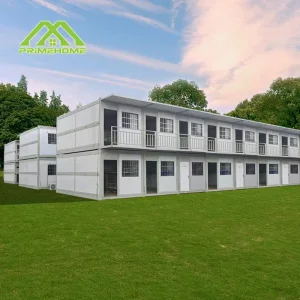
Recommended for permanent multi-unit modular compounds, dining halls, and multi-story stacked accommodation complexes.
Technical Roadmap (2025–2030): Off-Grid Solar & Eco-Smart Modular Camps
Integrating renewable energy generation, smart microgrid management, and IoT climate controls to support Oman’s net-zero carbon initiatives.
Rooftop Photovoltaic (PV) Integration
With Oman possessing some of the world's highest solar irradiance levels (exceeding 2,200 kWh/m² annually), our next-generation foldable containers feature factory-ready roof mounting brackets for lightweight flexible solar panels. Coupled with a compact lithium battery storage bank (BESS) housed within a dedicated technical cabinet, these units operate completely off-grid in desert exploration zones, powering lighting, refrigeration, and high-efficiency inverter AC units without diesel generator noise or emissions.
IoT Smart Energy Management
Future camp infrastructure demands centralized digital oversight. Integrated smart sensors monitor interior humidity, ambient temperature, and power consumption across camp networks. Automated smart thermostats dynamically adjust cooling cycles based on room occupancy, reducing energy waste by up to 30% in remote worker camps across the Sultanate.
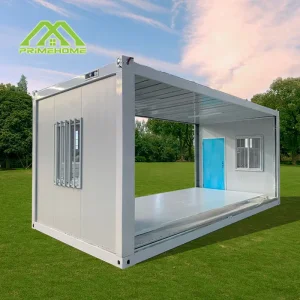
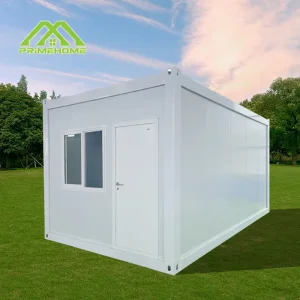
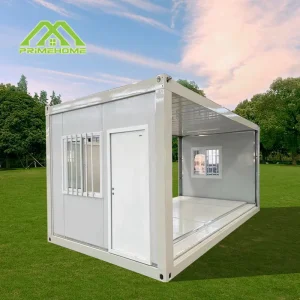
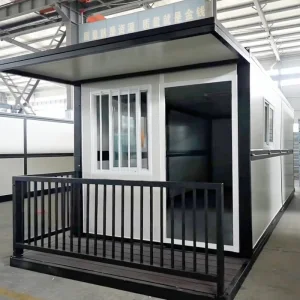
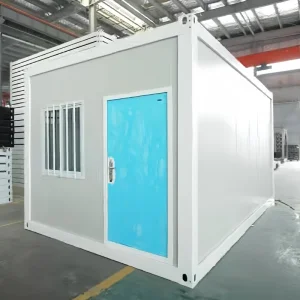
Complete Foldable Container Product Line for Oman Direct Procurement
Explore our complete OEM/ODM catalog of collapsible container dwellings, mobile offices, guard houses, and emergency shelter solutions engineered for high performance.
Frequently Asked Questions (FAQ) for Omani Importers & Contractors
Expert answers addressing procurement, technical engineering, regional shipping, thermal performance, and compliance for the Oman market.
Ready to Mobilize Your Oman Project with High-Performance Modular Housing?
Get direct factory pricing, engineering drawings, CAD layout support, and landed freight quotes for Muscat, Duqm, Sohar, or Salalah within 24 hours.
Send Inquiry Now