
Primary Foldable & Rapid-Assembly Series
1. The Philippine Macro-Industrial Realities & The Modular Shift
The Republic of the Philippines stands at a pivotal junction of rapid macroeconomic expansion, urban consolidation, and heightened climatic vulnerability. As the nation advances its "Build Better More" (BBM) infrastructure initiative and addresses a persistent national housing shortage estimated at over 6.5 million units, traditional wet-construction methods (masonry, poured-in-place reinforced concrete, and timber framing) encounter immense friction. Structural challenges including high site-labor volatility, extended project lead times, monsoon-induced weather disruptions, and complex inter-island logistics across the 7,641 islands of the Philippine archipelago heavily strain conventional project viability.
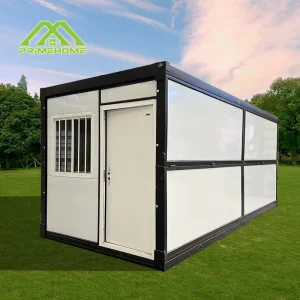
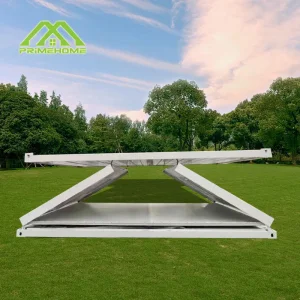
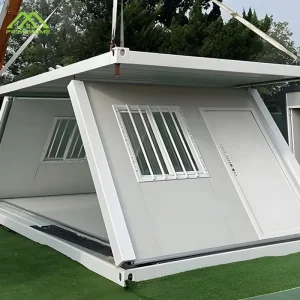
In response, top-tier general contractors, industrial land developers, commercial resort syndicates, and Local Government Units (LGUs) are aggressively transitioning toward factory-engineered, hot-dip galvanized Z-Folding and X-Folding Container House Systems. Manufactured in specialized precision industrial complexes—such as Suzhou PrimeHome Technology Co., Ltd. in China—these modular structural units provide an unprecedented ratio of volumetric shipping efficiency, structural durability, and rapid site deployment.
2. Climate-Resilient Structural Engineering & Technical Blueprint
Operating structural assets within the Philippine geography requires engineering for extremes. The country experiences an average of 20 tropical cyclones annually, sits directly on the Pacific Ring of Fire (Seismic Zone 4 under the National Structural Code of the Philippines - NSCP), and maintains high humidity levels conducive to rapid atmospheric corrosion. High-quality foldable container houses destined for Manila, Cebu, Davao, or island developments must adhere to rigorous structural parameters.
Typhoon & Wind Load Resistance
Constructed with Q235B/Q355B cold-formed structural steel profiles. The main load-bearing corner columns and perimeter beams are engineered to withstand lateral wind pressures up to 2.5 kPa, translating to Category 5 typhoon resistance (250 km/h sustained wind loads). Special interlocking corner twist-locks prevent uplift during extreme storms.
Seismic Zone 4 Hinge Mechanics
Traditional rigid masonry cracks under seismic shearing. PrimeHome foldable units utilize patented multi-point articulated mechanical hinges with EPDM rubber damping gaskets. This allows controlled micro-flexure during ground acceleration, dissipating kinetic energy and maintaining structural integrity up to Magnitude 8.0 earthquakes.
C4/C5 Coastal Corrosion Protection
All steel components undergo a multi-stage surface treatment: mechanical shot-blasting to Sa 2.5 grade, hot-dip galvanization with a minimum zinc coating weight of 120g/m², followed by an electrostatic fluorocarbon epoxy powder topcoat (70–100μm thickness). Tested to 1,000-hour neutral salt spray standards.
Engineering Specifications Comparison Matrix
| Structural Parameter | PrimeHome Philippines-Grade Foldable Unit | Standard Market Import Unit | Conventional Masonry (CHB) |
|---|---|---|---|
| Steel Frame Specification | 2.5mm–3.0mm Q355B Hot-Dip Galvanized Frame | 1.5mm–1.8mm Untreated Cold-Rolled Steel | Non-Steel Structure (Concrete Hollow Blocks) |
| Insulation Core Material | 75mm PIR / High-Density Rockwool (Non-combustible A1) | 50mm Low-density EPS Foam | Air Gap / Poured Mortar Filling |
| Thermal Conductivity (U-Value) | 0.022 W/m·K (PIR Core) - Keeps interior cool | 0.045 W/m·K (EPS) - High heat absorption | 1.30 W/m·K - Extremely hot without heavy AC |
| Shipping Density (40ft HQ) | 10 to 12 Folded Sets (280 sqm usable space) | 6 to 8 Sets (Unoptimized folding ratio) | Raw materials require multiple heavy truckloads |
| On-Site Assembly Labor | 4 Workers / 1 Crane / 15-30 mins per box | 6 Workers / 2 Hours per box | 15-20 Workers / 30-45 Days |
| Philippine Standard Compliance | NSCP 2015, PEC 2017, DPWH Modular Guidelines | Non-standard imported wiring/pipe sizes | Varies heavily based on local contractor skill |
3. Strategic Industry Application Scenarios Across the Philippines
The versatile footprint of 20ft and 40ft Z-folding container houses enables seamless adaptation across diverse Philippine economic sectors. Below are four key deployment archetypes proven in local island conditions:
A. Mining, Energy & Infrastructure Worker Camps
Location Focus: Mindanao, Caraga Region, Palawan, ZambalesRemote mining concessions (nickel, gold, copper) and geothermal/solar energy installation sites demand heavy-duty, relocatable housing for site engineers and laborers. Foldable container housing provides fully air-conditioned, fire-rated dormitories, executive field offices, mess halls, and sanitary blocks. Once project phases finish, entire camps can be folded, loaded back onto flatbed trucks or barges, and transported to the next site zeroing out capital write-offs.
B. Eco-Resort & Island Tourism Expansion
Location Focus: Palawan (El Nido/Coron), Siargao, Boracay, BoholIsland destinations face strict DENR (Department of Environment and Natural Resources) environmental compliance regarding permanent concrete foundation work. PrimeHome foldable structures use eco-friendly screw-pile foundations with zero concrete footprint. Customized with bamboo-composite cladding, floor-to-ceiling panoramic glass, and integrated solar power kits, resort owners can scale luxury glamping cabins within weeks during peak tourist seasons.
C. Urban BPO Overflow & Metro Manila Site Offices
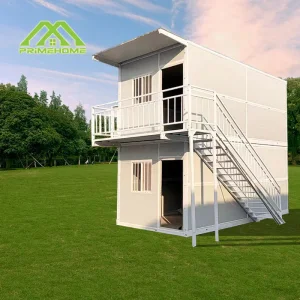
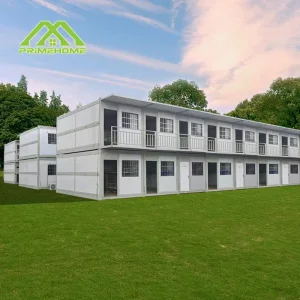
Location Focus: BGC, Makati, Ortigas, Cebu IT Park, Clark Special Economic ZoneHigh land costs in Metro Manila and Metro Cebu dictate efficient space utilization. PrimeHome modular units serve as stackable 2-to-3 story site control centers, temporary BPO training annexes, and high-density urban worker accommodations. Their fireproof sandwich panels and superior acoustic insulation (35dB noise reduction) create quiet, productive interior workspaces next to busy construction zones.
D. NDRRMC & LGU Emergency Disaster Relief
Location Focus: Visayas Typhoon Belt, Bicol Region, Eastern SamarFollowing natural disasters, rapid shelter deployment is vital. Unlike temporary canvas tents which fail in harsh weather, foldable container houses offer immediate, secure medical clinics, command posts, and emergency family shelters. Pre-installed Philippine-standard electrical wiring (220V/60Hz) and plumbing fixtures ensure true plug-and-play operation upon landing at local ports.
4. Philippine Building Code & Electrical Compliance Protocols
Importing prefabricated modular buildings into the Philippines without localized factory customization often leads to costly site retrofitting. PrimeHome manufactures container units strictly aligned with Philippine construction guidelines and regulatory body standards:
Philippine Electrical Code (PEC 2017)
Electrical systems pre-wired inside wall panels utilize 220V / 60Hz single-phase or three-phase configurations. Wiring consists of flame-retardant THHN/THWN-2 copper conductors enclosed in rigid PVC conduits, compatible with Meralco, Visayan Electric, or local electric cooperative hookups. Outlets feature standard Universal Type A/B grounding sockets.
NSCP 2015 Structural Code Standards
Engineering calculations account for dead loads, live loads (minimum 2.0 kN/m² floor capacity), wind loads (Zone 1 to Zone 3 wind velocity ratings), and dead-weight distribution for crane lifting at Philippine ports (Manila South, Subic Bay, Cebu Port Center, Davao Sasa Port).
Sanitary & Plumbing Provisions
Pre-installed sanitary modules feature PPR hot/cold water supply lines and heavy-duty PVC waste lines matching standard Philippine pipe dimensions (50mm greywater, 110mm blackwater). Integrated floor drains feature removable P-traps to prevent sewer gas backflow in humid tropical conditions.
5. Technology Roadmap & Future Outlook (2026–2030)
As smart technology converges with industrialized modular construction, Suzhou PrimeHome Technology is introducing next-generation innovations specifically tailored for island nations like the Philippines:
Solar PV-Roof Integration
Factory-fitted monocrystalline flexible solar panels embedded directly into folded roof profiles. Combined with integrated LiFePO4 battery storage, units operate completely off-grid in remote Philippine island resorts or disaster zones without diesel generators.
BIM & Digital Twin Manufacturing
Every foldable container house order is modeled using 3D Building Information Modeling (BIM) software. Philippine clients receive exact digital twin IFC files for seamless integration into enterprise site masterplans prior to shipping.
Smart Micro-Grid & Climate Controls
IoT-enabled interior environmental sensors monitor humidity, internal temperature, and structural vibration in real-time. Automated smart ventilation vents prevent mold growth during long monsoon rainy seasons.
6. Frequently Asked Questions by Philippine Importers & Developers
Key operational, legal, structural, and procurement answers curated by PrimeHome senior structural engineers:
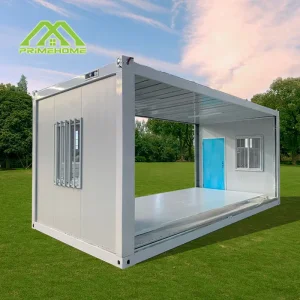
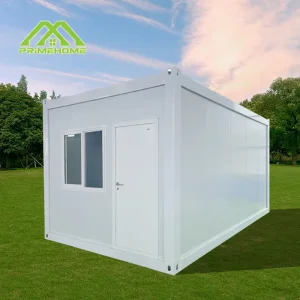
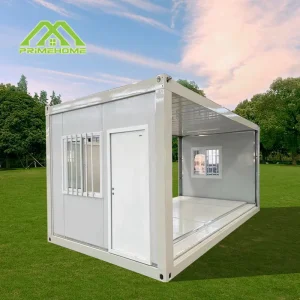
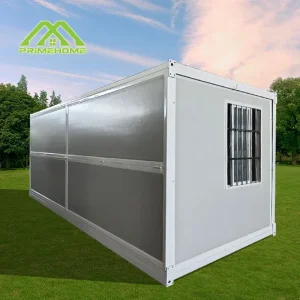
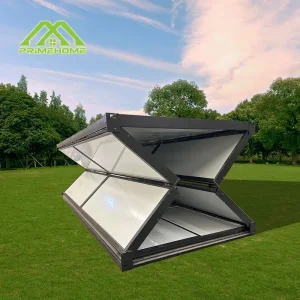
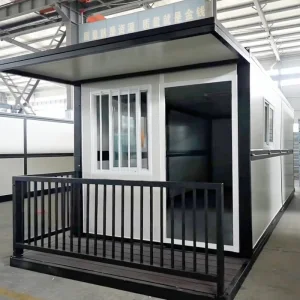
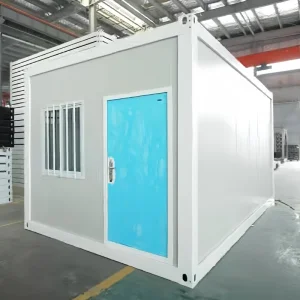
Full Portfolio of Foldable & Commercial Container Units
Explore our full suite of factory-direct models engineered for housing developments, resort hospitality, site management, and emergency infrastructure across the Philippines.
Accelerate Your Philippine Project with PrimeHome Engineering
Direct factory pricing, custom structural engineering drawings, loading optimization calculations, and comprehensive support for Philippine importers, LGUs, and general contractors.
Send Inquiry Now