
Featured Space Capsules for Russian Deployment
Factory-engineered space capsule structures equipped with thermal break framing, triple-glazed Low-E glass, and integrated HVAC heating systems built specifically for Siberian and Arctic conditions.

Custom Modern & Luxury Design Camping Cabins Prefabricated Space Capsule Rooms for Russia Scenic Resorts
View Product Details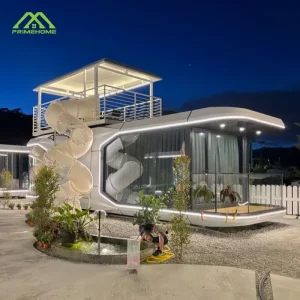
Industrialized Intelligent Luxury Space Capsule Plug-and-Play Prefabricated Cabin for Harsh Climates
View Product Details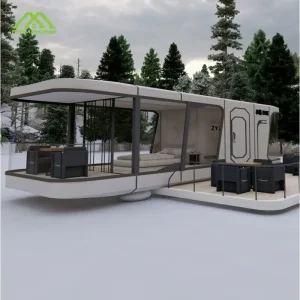
Wholesale Luxury Camping Cabin Prefab Modular Steel Smart Space Capsule House for Sub-Zero Environments
View Product Details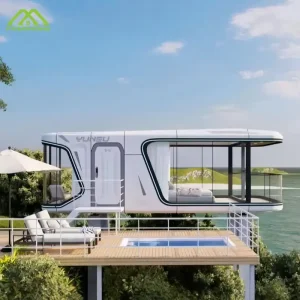
Custom Popular Space Capsule Cabins First Choice for Outdoor Hotel & Mobile Villa in Russia Scenic Spots
View Product DetailsRussia's Paradigm Shift in Modular Eco-Hospitality & Extreme Industrial Housing
The demand for high-performance, prefabricated Space Capsule Houses across the Russian Federation has surged exponentially over the past three years. Driven by national initiatives to expand domestic eco-tourism—ranging from the volcanic landscapes of Kamchatka and the aurora trails of Murmansk to the ancient shores of Lake Baikal and the Altai Mountains—developers face a common obstacle: the traditional brick-and-mortar construction bottleneck. In regions characterized by frozen soil, remote access, short construction windows (often under 4 months), and stringent environmental protection codes, traditional building methods are structurally and economically unviable.
Simultaneously, major energy, mining, and industrial transport corridors (such as the Northern Sea Route, the Baikal-Amur Mainline upgrade, and Yamal LNG developments) require rapidly deployable, high-comfort, anti-freeze worker accommodation and executive field headquarters. Space capsules—engineered with aeronautical-grade aluminum shells, polyurethane-injected sandwich insulation, and fully integrated MEP (Mechanical, Electrical, Plumbing) systems—have emerged as the definitive structural solution.
As a leading Chinese manufacturer specializing in modular space capsules and luxury prefabricated cabins, Suzhou PrimeHome Technology Co., Ltd. delivers turn-key solutions specifically optimized for Russia's harsh geographic and climatic realities. This technical whitepaper explores the critical engineering standards, supply chain dynamics, and structural innovations required to successfully deploy space capsules across Russia.
Engineering for Russia’s Extreme Microclimates
Deploying modular housing in Russia requires solving three core physics challenges: extreme thermal bridging, heavy snow/ice accumulation, and permafrost soil heave.
Sub-Zero Insulation & Thermal Envelope
Standard modular homes suffer massive energy loss through metallic cold bridges. PrimeHome space capsules for Russia feature continuous 100mm Polyurethane (PU) high-density foam injection combined with Aerogel thermal break strips between the hot-dip galvanized steel frame and exterior aluminum cladding. This achieves an overall U-value below 0.15 W/(m²·K), maintaining +22°C inside even when ambient external temperatures drop to -50°C.
Extreme Snow Load & Aerodynamic Shells
Siberian winter snow accumulation can exceed 3.5 to 4.0 kPa. The curved, aerodynamic shape of our space capsule roof prevents heavy snow drifting while reducing wind load coefficient under Arctic gale forces (up to 120 km/h). Reinforced structural steel ribs (Q235B/Q355 galvanized steel) ensure zero structural deflection under maximum regional ice loads.
Permafrost & Foundation Adaptability
In regions with active permafrost thaw (such as Norilsk or Yakutsk), deep concrete foundations disrupt the thermal balance of the soil. PrimeHome capsules utilize non-invasive screw-pile or adjustable steel point-foundations. This creates a ventilated air gap beneath the chassis, preventing thermal conduction into the ground while keeping the cabin perfectly level during seasonal ground heave.
Anti-Freeze Plumbing & Smart Heating
Water supply lines in sub-zero climates are prone to catastrophic pipe bursts. Our capsules are manufactured with self-regulating electric heat tracing cables along all internal PEX water conduits, pre-insulated greywater drain lines, and smart dual-zone electric floor heating coupled with heat-recovery ventilation (HRV) units to retain interior humidity and heat.
Key Commercial & Industrial Applications across Russia
From revenue-generating luxury glamping resorts to vital industrial outposts, explore how PrimeHome space capsules serve diverse Russian markets.
1. Arctic & Northern Lights Glamping Resorts (Murmansk & Karelia)
The Kola Peninsula and Murmansk Region attract hundreds of thousands of aurora-chasing tourists annually. Space capsules equipped with curved overhead panoramic skylights made of triple-layer toughened Low-E glass allow guests to view the Aurora Borealis from the warmth of their king-size bed. Plug-and-play installation enables hotel operators to construct a 20-unit luxury resort within 14 days without damaging the surrounding tundra.
2. Siberian Wilderness Eco-Lodges (Lake Baikal & Altai Mountains)
Lake Baikal and the Altai Republic enforce strict environmental building regulations prohibiting permanent foundation work near water reservoirs and natural sanctuaries. PrimeHome self-contained space capsules feature optional integrated gray-water treatment tanks, incinerating toilets, and off-grid solar-battery compatibility, enabling zero-impact luxury eco-lodges that can be relocated if site concessions change.
3. Energy, Mining & Infrastructure Field Camps (Yamal & Sakha)
Mining operators and oil & gas contractors working in remote Siberian regions require durable, high-comfort housing for engineers and managers. Rather than basic, cold container barracks, custom space capsules provide high-tech, soundproof, and comfortable living quarters that boost worker retention and withstand extreme snowdrifts during brutal sub-zero winters.
4. Highway Commercial & Hospitality Hubs (M-11 & Trans-Siberian)
As Russia expands its major arterial highways and logistics corridors, highway service station developers are adopting space capsule pods as modern drive-in motel units, fast-food retail kiosks, and secure rest stations for long-haul drivers. Compact 20ft and 40ft units are delivered fully wired for immediate operation upon grid connection.
China Factory Advantage & Direct Logistics to Russia
Leveraging Suzhou PrimeHome's 28,000m² manufacturing ecosystem and mature cross-border rail and road transport infrastructure.
Procuring space capsules for Russian projects requires a manufacturing partner with vast industrial capacity and direct export channels. Located in Suzhou, Jiangsu—the heart of China's high-tech steel and modular building cluster—Suzhou PrimeHome Technology Co., Ltd. offers unparalleled supply chain advantages:
- Vertical Manufacturing Integration: From laser cutting of structural steel frames to robotic welding, PU sandwich panel pressure laminating, electrical wiring harness assembly, and internal hotel fit-outs—100% of production takes place inside our factory. This eliminates middleman markups and guarantees strict quality control.
- High Monthly Volume (5,000+ Units Capacity): Our scalable assembly lines allow us to handle large-scale resort developments (50–100+ space capsules) within 30 days of design freeze, ensuring your project meets strict opening deadlines.
- Optimized Logistics Corridors to Russia:
- China-Europe Railway Express (CR Express): Direct container train routes from Suzhou/Zhengzhou via Manzhouli or Zabaykalsk to Moscow (Vorsino/Kresty) in just 12–16 days.
- Direct Road Freight via Heihe-Blagoveshchensk Highway Bridge: Flatbed truck shipping across the Amur River bridge for fast delivery to the Russian Far East and Eastern Siberia.
- Sea Freight to Vladivostok / St. Petersburg Ports: Cost-effective shipping options for coastal projects.
- Flat-Pack & Modular Shipped Units: Space capsules are specifically dimensions-engineered for standard 40ft Flat Rack (FR) or 40ft High Cube (HQ) shipping containers, protecting exterior mirror finishes and glass panes during multi-modal transit.
Space Capsule Engineering Specifications for Russia
Rigorous engineering metrics designed to comply with Russian Gost-R building standards, SNiP thermal requirements, and EAC safety rules.
| Parameter / Metric | Standard Specification (PrimeHome Cold-Series) | Russian / EAC Compliance Standard |
|---|---|---|
| Structural Frame | Heavy-duty Galvanized Steel Q235B / Q355 with Fluorocarbon Anti-Corrosion Coating | GOST 27772-88 (Building Steel Structures) |
| Exterior Shell | Aeronautical Aluminum Alloy Shell (5052-H32, 2.0mm thickness) Fluorocarbon Finish | GOST 21631-76 (Corrosion Resistance) |
| Wall Insulation | 100mm High-Density Injected Polyurethane (PU) + Thermal Break Aerogel Gasket layer | SNiP 23-02-2003 (Thermal Protection of Buildings) |
| Glazing System | Curved/Flat Triple-Glazed Tempered Low-E Glass filled with Argon Gas (6mm+12Ar+6mm+12Ar+6mm) | GOST 24866-2014 (Insulating Glass Units) |
| Operating Temperature | -50°C to +50°C (Certified All-Weather Operation) | GOST 15150-69 (Climatic Category UHL1 / Northern Zone) |
| Roof Snow Load | Up to 4.0 kPa (400 kg/m²) structural capacity | SNiP 2.01.07-85* (Loads and Impacts / Snow Zone VI-VII) |
| Wind Resistance | Typhoon / Arctic Gale Resistant up to 120 km/h (Category 12) | SNiP 2.01.07-85* (Wind Pressure) |
| Electrical Voltage & Sockets | 220V / 50Hz single-phase or 380V three-phase, Type C/F Russian Standard Sockets | EAC TR CU 004/2011 (Low Voltage Equipment Safety) |
| Smart Home Integration | Smart Touch Control Panel, Voice Assistant, Remote App Control (Tuya/Modbus) | EAC TR CU 020/2011 (Electromagnetic Compatibility) |
| Fire Resistance Rating | Grade A Non-combustible Core Materials (Rockwool/PU Fire Retardant Class B1) | GOST 30244-94 / Federal Law No. 123-FZ |
Full Product Catalog for Global & Russian Importers
Select from our complete range of customizable mobile homes, apple cabins, and smart space capsules engineered for immediate export.
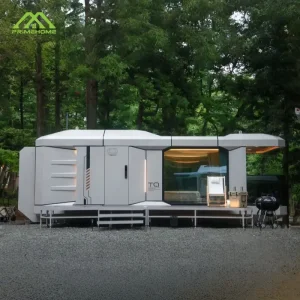
China Modular Prefabricated Housing Customized Mobile Space Capsule Rooms with Futuristic Technological Feel
View Product Details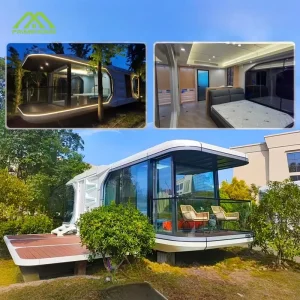
China Bestselling High-Tech Housing Space Capsule Villas for Hotels, Scenic Spots & Russian Homestays
View Product Details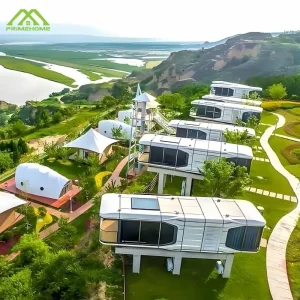
Custom Multi-Functional Mobile Space Capsule Room Direct Sales for High-End Russian Camping
View Product Details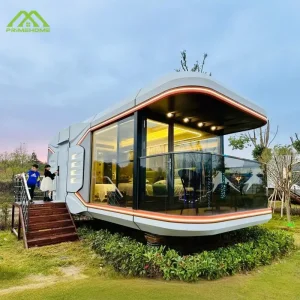
Wholesale Fully Furnished Luxury Prefabricated Spacecraft Style Capsule House for Creative Hotels
View Product Details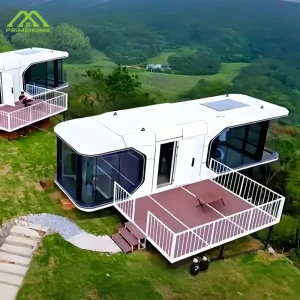
Stylish 20ft & 40ft iPhone-Themed Space Capsule Rooms with Integrated Smart Systems for Harsh Climates
View Product Details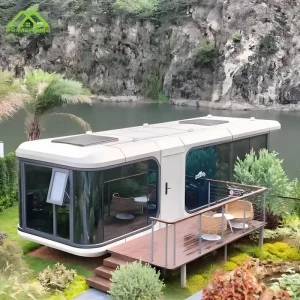
Luxurious Intelligent Mobile Space Capsules for Future City Projects & Modular Accommodation in Russia
View Product Details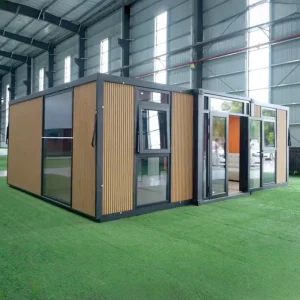
Modern Wooden Grille Design Prefab Home Expandable Container House for Russian Tourist Homestays
View Product Details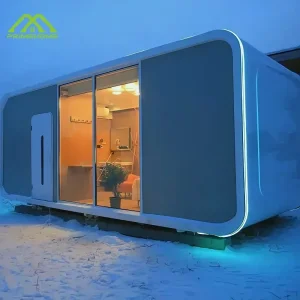
Custom Modern Apple House 40-Foot Mobile Luxury Cabin Camping Capsule Room for Resort Owners
View Product DetailsFrequently Asked Questions (FAQ) for Russian Buyers
Answers to common engineering, logistics, customs clearance, and local compliance inquiries regarding importing space capsules from China to Russia.
How do PrimeHome space capsules handle extreme Russian winter temperatures (-40°C to -50°C)?
Our cold-climate space capsule series incorporates a multi-layer thermal insulation envelope: 100mm injected polyurethane (PU) foam with zero thermal bridges, Aerogel frame gaskets, and triple-glazed Low-E tempered glass filled with Argon gas. In addition, all water pipelines are outfitted with self-regulating heating traces, paired with electric underfloor heating and heat-recovery ventilation (HRV) systems to ensure interior comfort at +22°C year-round.
What documents and EAC/GOST certificates are provided for customs clearance in Russia?
PrimeHome supplies complete export documentation tailored for Eurasian Economic Union (EAC) customs entry, including EAC declarations of conformity for electrical components (TR CU 004/2011 and TR CU 020/2011), factory structural test reports, fire safety certificates (B1 non-combustible classification), Commercial Invoices, Packing Lists with HS Code classifications, and Bill of Lading / Rail Consignment Notes (SMGS).
What is the typical lead time and railway transport duration from Suzhou to Moscow or Vladivostok?
Standard manufacturing lead time is 20 to 25 calendar days per order. Rail shipping via China-Europe Freight Train (from Suzhou via Manzhouli/Zabaykalsk to Moscow Vorsino hub) takes approximately 12 to 16 days. Trucking options across the Heihe-Blagoveshchensk bridge offer even faster 7-to-10 day delivery to Far East regions.
How are the space capsules installed on-site, and what foundation type is recommended for Siberian soil?
Space capsules arrive 100% pre-assembled from the factory—including prefabricated luxury bathrooms, integrated lighting, air conditioning, and furniture. On site, units are lifted onto screw-pile foundations or steel point-footings using a standard mobile crane. Installation involves simply connecting water, sewage, and main power cables to external utility sockets, requiring less than 4 hours per capsule.
Can the electrical wiring, sockets, and smart systems be customized to Russian standards?
Yes. All internal wiring, circuit breakers, and power outlets are configured to 220V/50Hz single-phase or 380V three-phase with standard European/Russian Type F grounded sockets. Smart home panels (lighting, motorized curtain tracks, digital door locks, climate control) are pre-configured with multilingual English and Russian user interfaces.
Partner with China's Premier Space Capsule Manufacturer for Your Russian Projects
Whether you are planning a luxury glamping resort in Murmansk, an eco-hotel on Lake Baikal, or an industrial camp in Yakutia, our engineering team provides free structural drawings, thermal calculations, and land shipping solutions.
Send Inquiry Now & Request Whitepaper Catalog